
The Human Edge: What AI Still Can’t Do in SEO
Key Takeaways Human-led SEO is what separates lasting organic growth from short-term spikes. Every few weeks someone asks, “What is left for a SEO strategist when AI can do everything from...

Key Takeaways
- Successful long-term SEO strategies involve humans making strategic decisions with AI performing supporting tasks.
- SEO helps design email campaigns and target ads and optimize conversions, and does all this without any recognition.
- Publishing large volumes of AI generated content with no oversight makes websites rank for a short period but ultimately results in a decline.
- Real knowledge and unique content accumulated over time cannot be matched by automated content.
- Brands that focus on optimizing SEO and building competitive intelligence are ahead of those competing brands that see SEO as just a source of website visitors.
Human-led SEO is what separates lasting organic growth from short-term spikes. Every few weeks someone asks, “What is left for a SEO strategist when AI can do everything from keyword research to content drafts to audits to briefs?”
The answer is a lot. SEO programs that do this best are not the ones that make the most noise and publish the most content. They are the ones that have a real person making the decisions. That may sound trivial, but it is proving to be the difference between lasting organic growth and reverse organic growth that happens six months later.
Should AI have a place in SEO? That’s not really up for debate. It should, and anyone not utilizing some form of AI is already behind. The more useful discussion, and one most people skip, is actually where AI helps and where it gives the false sense of advancement.
What’s Actually Driving Results Right Now
AI is harnessed to help speed up the processes and is not relied on to do the processes. This is key to success.
It should be self evident, but when resources (in this case, people) are abundant, AI can be allowed to help create the strategies in a more direct sense. For example, a team can have less people writing more content. More content equals more potential to rank higher, but if it is not helping your overall website traffic, AI is not being used to its full potential.
There is a common misconception that being the most active content publisher will give you the competitive advantage. In reality, content is more successful when people are actually using it to determine which keywords to optimize, which strategies to cut, and to understand what the trends in searches are focusing on.
In the world of rapidly advancing technology, human judgment always has a place. For example, a tool can create a hundred briefs in a matter of hours. However, it cannot determine which of the briefs are useful to your brand in a hundred different ways. This is where the strategists become useful. Even though the technology used to execute tasks is rapidly advancing, the need for the strategist remains.
The structure of a team is changing as well. The best functioning teams are not necessarily the largest. In fact, a larger team can be less efficient. Some of the best functioning teams have a smaller number of team members that handle the bulk of the content production. The rest of the team handles data analysis and content that is not as frequent, but still requires the most knowledge. AI took care of the repetitive tasks. Now only the most interesting work remains.
SEO as the Intelligence Layer Across Your Entire Program
Keyword data is the ideal data to analyze in an SEO program and makes other channels better. This is often done without acknowledging the contributions made by SEO programs.
Data that describes user intent is used by media teams to improve targeting for valuable keywords, which may even result in achieving a better quality score and a lower cost of user acquisition. This same data is used by email teams to create sophisticated segments and send emails to those who are attempting to solve a particular problem, rather than emails to demographic-based segments. Finally, teams focused on optimizing conversions use incoming data to improve a webpage, rather than hypothesizing what users would appreciate the most.
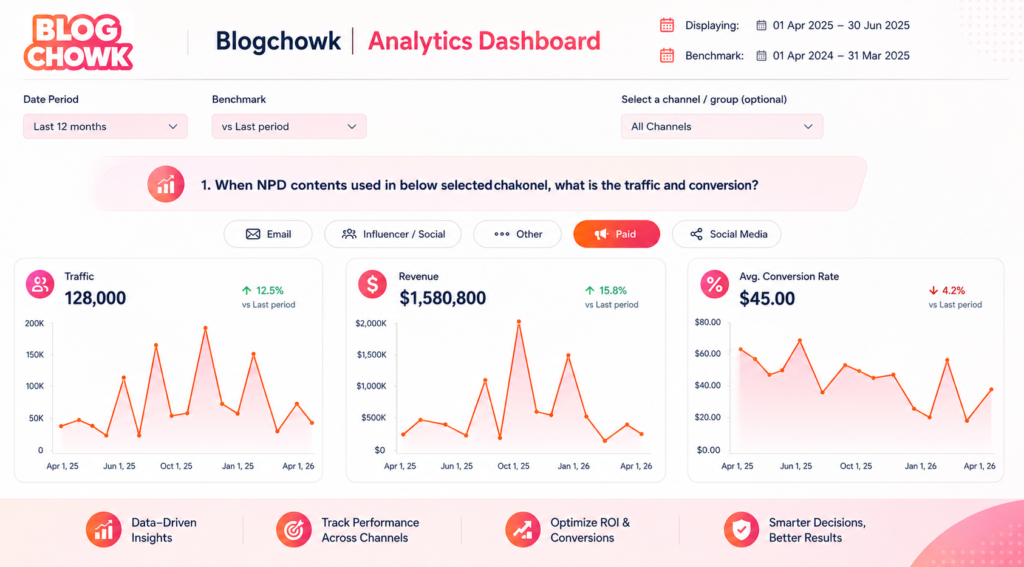
Most of this is absent from a standard organic traffic report, which is one of the reasons why the direct contribution of SEO is consistently undervalued in organizations. A search program may be improving the performance of three other channels, and those other channels do not relate back to the source of the intelligence.
When a person is managing the cross-channel intelligence and is able to pinpoint where SEO data can influence the decisions of a different team, then those performance improvements are realized in multiple areas. This type of focus is not standard; it requires someone to break down the silos and turn the insights from search behavior into actionable decisions for the other teams. AI can present the information, but it will not connect the dots from a “this is what users are looking for” to a “this is how we need to change our email segmentation for this quarter.”
This also plays to the advantage of the product and content roadmaps. With the right person, search data can be interpreted to show what your customers actually want long before there is supporting demand in other areas such as customer surveys or tickets. Brands that respond to that early insight gain a competitive advantage that is hard to duplicate.
The Decisions AI Isn’t Making for You
This isn’t an argument against using AI in SEO — it clearly belongs in the workflow, and pretending otherwise would be its own kind of mistake. The real question is where it helps and where a person is still needed, and being honest about that boundary is what separates programs that are actually improving from ones that just look busy.
Prioritization. AI tools are good at surfacing opportunities, sometimes hundreds of them at once. What they don’t know is which ones actually fit your business goals, your margin profile, or where you’re trying to position the brand a year from now. That call still belongs to a person who understands the business beyond what’s in the keyword data.
Reading competitors. Ranking data shows you what happened. It tells you a competitor moved up three positions on a term you care about. Understanding why they moved, and what to actually do about it, takes context that isn’t sitting in the data itself — it requires reading their content strategy, their positioning, and often their broader business moves.
Avoiding risk. Scaling AI-written content without real oversight is one of the fastest ways to trigger a visibility drop. Sites that leaned heavily on automated content at scale have shown a recognizable pattern: an early spike in rankings as volume pays off, followed by a steep decline once quality gaps catch up with them. Search engines have gotten increasingly good at identifying content that adds little original value, regardless of how it was produced.
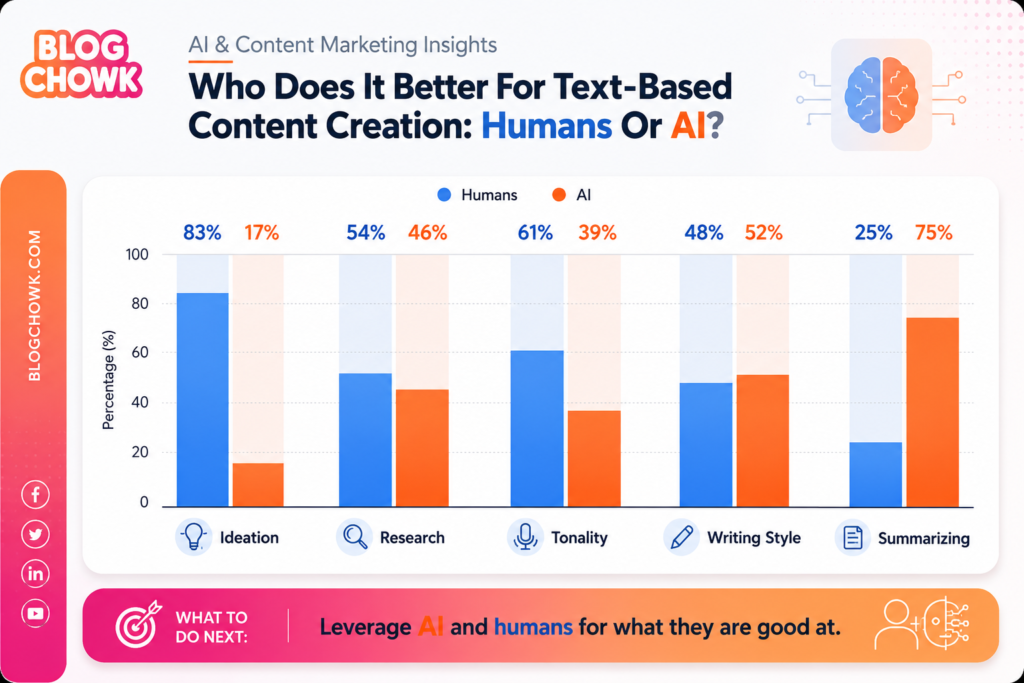
Adapting to change. Algorithm updates and new search surfaces, like AI-generated overviews appearing directly in results, require real-time judgment calls that automated systems simply aren’t built to make on their own. They keep optimizing for whatever they were originally configured to optimize for. They don’t recalibrate their own assumptions when the environment shifts underneath them — a person has to notice the shift first.
The Compounding Advantage of Keeping Humans in the Loop
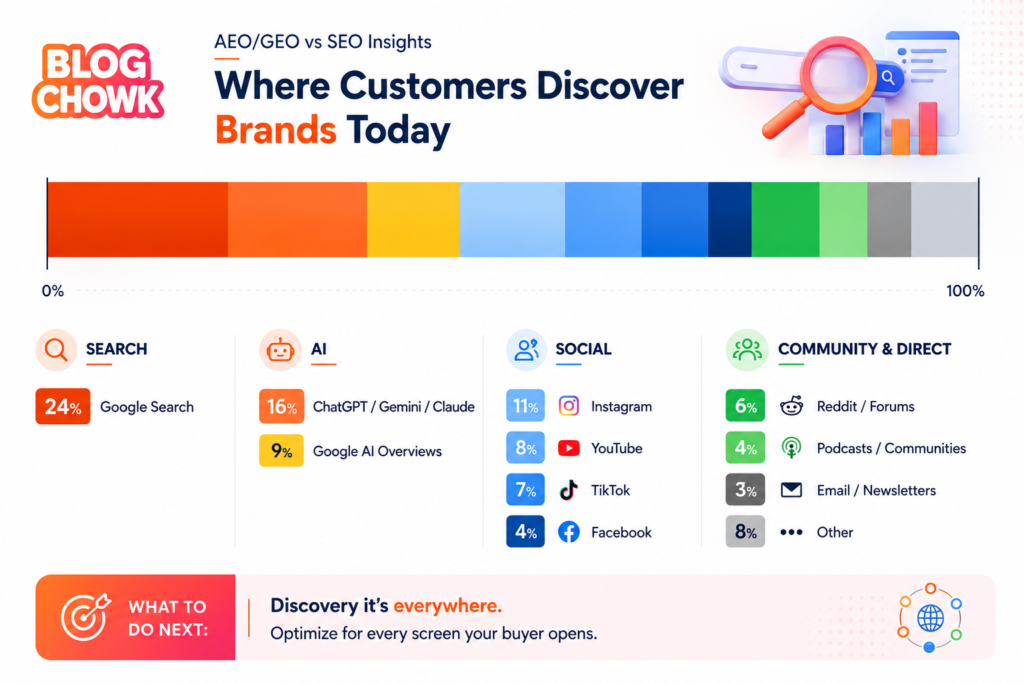
With the recent changes search engines have made, how a site ranks is no longer the only way to evaluate a site’s search results. There are now many ways a user can interact with and evaluate a site before they even visit it. AI-generated content, conversational search results, and even search engine features built on AI are new ways to evaluate a site. Editorial judgment is the only way to ensure that response is consistent, and you cannot fully automate that process.
The longer an SEO program runs and the longer an analyst reads the signals, the more the program’s intelligence value compounds. Search data captures customer intent and emerging topics before new phrasing even occurs. Organizations that have the analyst to interpret that data are the ones that are going to ahead of the market instead of responding to it after the competition.
That advantage works its way into content, product, and strategic decisions. Content that is well thought out and built continuously is less likely to be copied at scale. A competitor can replicate a content format or a publishing schedule in a week. But they cannot replicate the time and effort it took to develop the understanding of a specific field and the originality that perspective brings. This content gap will outlast any changes to the content delivery systems of search engines.
Blogchowk’s Take
AI has undoubtedly advanced the speed with which SEO tasks can be completed, and there are fewer arguments for a full return to manual SEO tasks. However, speed and discernment are not one and the same, and conflating the two is causing many SEO programs to fail in areas they have yet to identify.
The only programs that are still growing are those that prioritize placing a person at the center of the program to discern what to prioritize and what the real opportunities are, while the execution is done by AI. The gap that exists around the competition and the real opportunities is a permanent gap. AI can perform a lot of tasks very quickly, but in the end, it can’t decide where to go.
FAQs
What is human-led SEO?
Human-led SEO is an SEO strategy where the person has the final say in the order of priorities, the positioning, and how to respond to the competition, while AI handles audits, clustering, drafts, and other execution tasks.
Does AI replace SEO strategists?
In the programs that are currently outperforming the rest, AI does not replace SEO strategists. The AI performs the execution tasks at high speed and in larger volumes, but the human who understands the real business context is needed to connect the execution to the tasks.
How does scaling AI content hurt SEO performance?
Publishing a large quantity of AI-generated content that lacks oversight will produce pages that are not valuable and generic. Search engines are improving in their ability to detect and suppress these pages and an initial short-term gain will be followed by sharp declines in visibility.
Can small businesses afford human-led SEO?
Yes, it can be done at a much smaller scale. An independent strategist using AI for execution while retaining control over positioning and prioritization is an example of human-led SEO at a lower budget.
Conclusion
The AI Systems that dominate SEO today outpace the competition and produce superior results with optimal user direction. Knowledge of where to focus efforts is what helps teams achieve sustainable results.
Changes in the world of SEO might result in structures that require less human control. However, at present, that human oversight is important the most. Enterprises that understand this are the ones gaining an advantage over their competitors.
For more posts like this, inspiring optimally for clients, follow Blogchowk.



No Comment! Be the first one.