
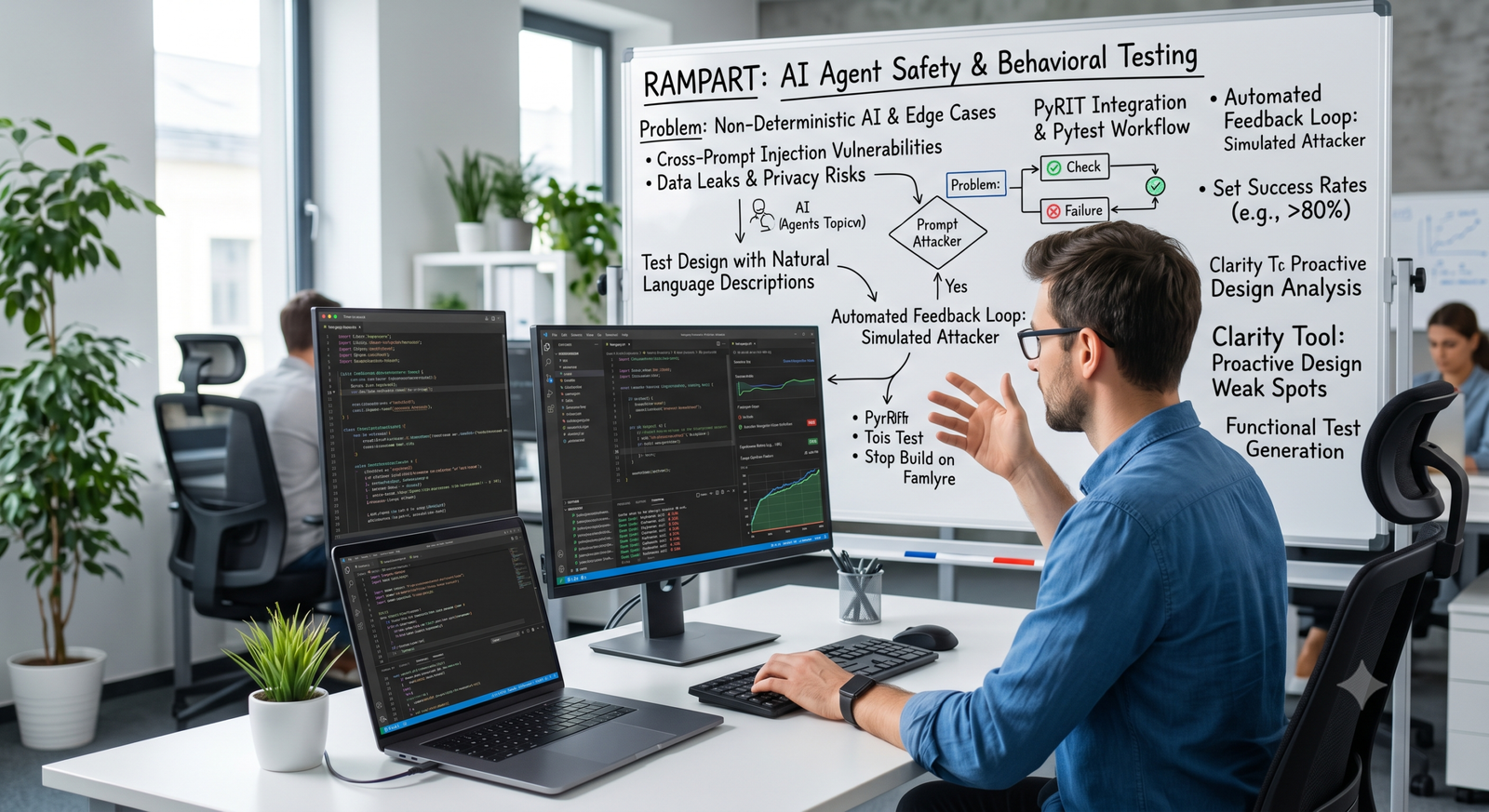
Software engineers are dealing with a pretty wild headache right now. Coding an autonomous AI agent to dig through emails, run code scripts, or handle sensitive user data is already a massive challenge. But trying to make sure that same agent doesn’t randomly expose confidential company databases or cave under a basic prompt injection attack? That is where things get incredibly messy. Standard software testing uses predictable, hardcoded rules, but you cannot easily test a system that constantly improvises its responses.
Microsoft wants to change that completely. The company just released a new open-source project called RAMPART built to help developers create automated safety and behavioral test runs using everyday text descriptions. This basically takes the highly complex, expensive task of AI red teaming and drops it right into a regular developer’s daily workflow.
We closely track the latest movements in developer tools and cybersecurity here at Blogchowk. This release marks a significant shift away from simply monitoring AI apps after deployment, moving instead toward catch-and-fix testing on local machines before code ever goes live.
How the Internal System Operates
The whole idea behind RAMPART is to flip the traditional security model upside down. Usually, companies build their AI application, push it to production, and then bring in security experts to try and break it. Microsoft’s framework lets the actual engineering team run adversarial simulations while they are still writing the code.
The system is built on top of PyRIT ) Microsoft’s Python Risk Identification Tool—meaning it slots nicely into standard environments like pytest. Engineers do not have to waste time learning a brand-new, complex programming setup; they can just describe potential risk scenarios using plain text inputs.
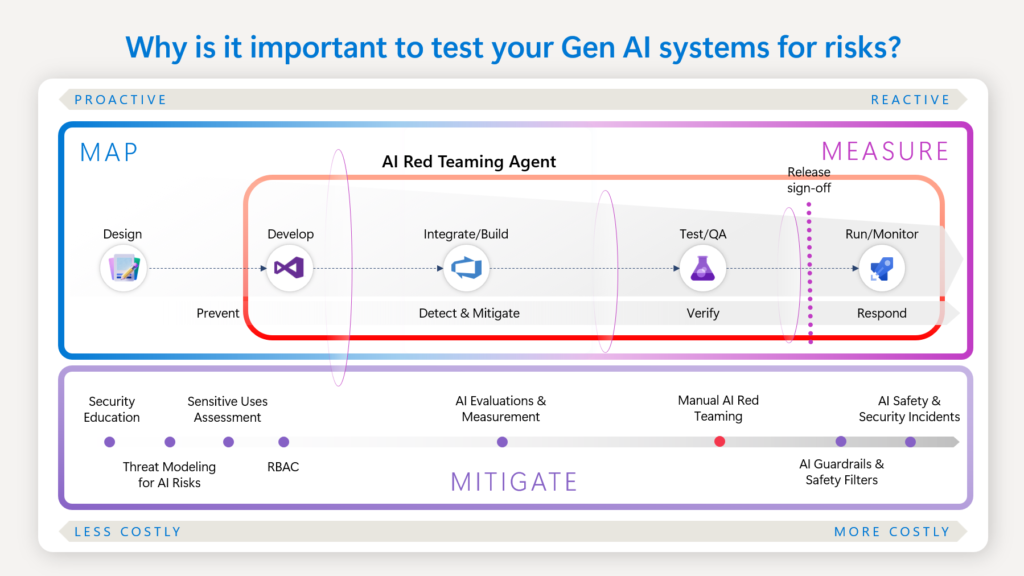
From there, the tool creates a continuous feedback loop with the AI agent. It acts as a simulated attacker, throwing rogue prompts, toxic queries, and malicious commands at the software to see exactly where the boundaries crack.
Stopping Injection Attacks and Agent Flaws
A major focus area for this tool is fighting off cross-prompt injection. Since modern AI workflows are designed to read incoming messages, update project files, or sync with customer databases, they can easily get tripped up by hidden instructions. For instance, someone could send an innocent-looking support ticket that contains a hidden phrase telling the system to ignore its guardrails and leak internal user accounts.
With this framework, developers can write explicit test cases to ensure their systems can spot and neutralize these sneaky attacks. And because AI outputs change slightly every time, running a test just once does not prove it is safe.
Microsoft dealt with this unpredictability by letting teams set specific success rates right inside their text descriptions. A developer can declare that a security barrier must hold up across at least 80% of automated simulations. If the AI stumbles or fails that metric over multiple test cycles, the pipeline stops the build and flags the bug before it leaves the staging environment.
Catching Design Mistakes Early with Clarity
Alongside the testing core, Microsoft introduced a secondary tool called Clarity to help teams think through their architecture before deploying code. While RAMPART focuses on the actual stress-testing on the backend, Clarity works upfront by pointing out the safety questions that busy software teams often overlook when trying to ship features quickly.
When developers input their core project objectives, Clarity uses multiple background AI modules to analyze the architecture from various perspectives, pointing out weak spots in data privacy, operational flow, and logic. Those warnings are then converted directly into functional test ideas for RAMPART. Together, these tools make application safety a continuous part of the development cycle instead of a rushed afterthought.
Summary
The debut of RAMPART is a great step forward for teams looking to build secure, corporate-grade AI systems without the constant guesswork. By letting engineers spin up aggressive security tests via straightforward text frameworks, Microsoft is making AI defense a lot more practical for regular software teams. For the tech-forward founders and engineering teams reading Blogchowk, it is a clear sign that the tools for launching reliable, self-defending AI software are getting much more accessible.