
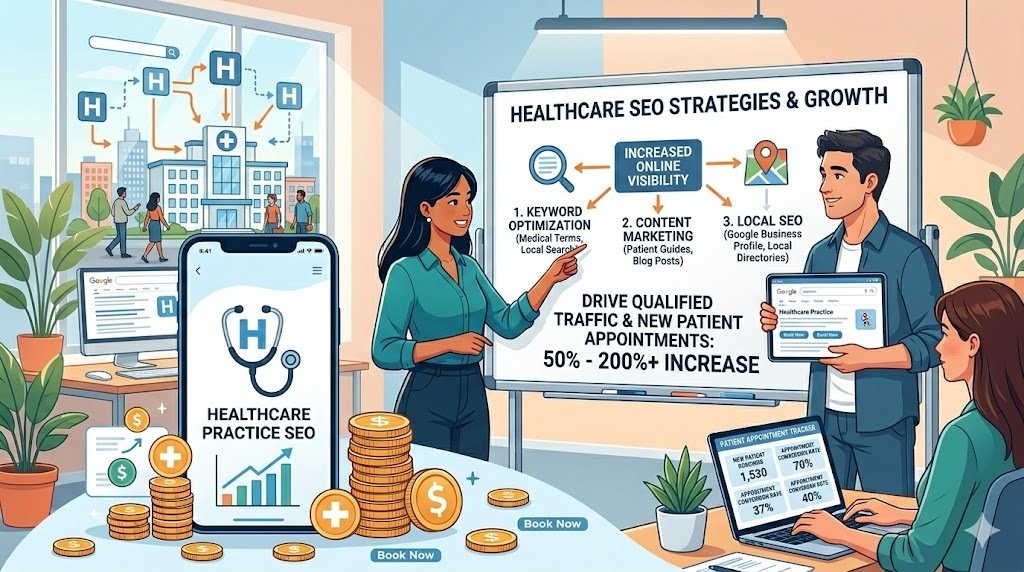
In today’s digital world, healthcare practices can’t depend on word-of-mouth or traditional ads. Patients are increasingly using search engines to find doctors, clinics, and medical information. This shift makes a healthcare SEO agency essential for providers. It helps them build trust and attract more patients online.
But how exactly do SEO strategies contribute to the growth of healthcare practices? The answer lies in visibility, credibility, and consistent patient acquisition. This article looks at the best SEO strategies for healthcare organizations. These strategies help build a strong online presence and support lasting growth.
Why SEO Matters for Healthcare Practices
Healthcare is one of the most competitive and trust-sensitive sectors. Patients don’t look for services—they look for reliability, authority, and reassurance. SEO connects your practice with patients engaged in active searches.
Key benefits of SEO in healthcare include:
- Increased online visibility
- Higher website traffic from relevant audiences
- Improved patient trust and credibility
- Long-term, cost-effective marketing
- Higher conversion rates than traditional channels
When done right, SEO puts your practice in front of the right audience at the right time.
Understanding Patient Search Behavior
Before implementing SEO strategies, it’s important to understand how patients search online. Most users begin with queries such as:
- “Best dentist near me”
- “Symptoms of the flu”
- “Top cardiologist in [city]”
These searches reflect intent—whether informational, navigational, or transactional. A solid SEO strategy connects your content to patient needs. This way, your website supports them at every step of their journey.
Core SEO Strategies for Healthcare Growth
1. Keyword Research and Optimization
Keyword research is the foundation of any SEO strategy. It involves identifying the terms potential patients use when searching for healthcare services.
Focus on:
- Service-based keywords (e.g., pediatric care, dental implants)
- Location-based keywords (e.g., clinics in Chicago, family doctor near me)
- Long-tail keywords (specific queries with lower competition)
Use these keywords in your website’s content, headings, and meta tags naturally.
2. High-Quality Content Creation
Content is one of the most powerful tools in healthcare SEO. Informative and accurate content for patients builds trust and boosts rankings.
Effective content types include:
- Blog posts on medical topics
- FAQs addressing patient concerns
- Service pages with detailed explanations
- Educational guides and resources
Writers should use a clear, accessible tone while maintaining medical accuracy. Regular updates also signal freshness to search engines.
3. On-Page SEO Optimization
On-page SEO optimizes each page on your website for both users and search engines.
Key elements include:
- Title tags and meta descriptions
- Header tags (H1, H2, H3)
- Internal linking
- Image optimization (alt text)
- URL structure
Proper on-page optimization improves readability, indexing, and user experience.
4. Local SEO for Healthcare Practices
Most healthcare searches are location-based, making a healthcare SEO agency essential to optimize local visibility, attract nearby patients, improve rankings, and ensure practices appear in relevant search results.
Important local SEO strategies:
- Optimize your Google Business Profile
- Use consistent NAP (Name, Address, Phone) details
- Collect and manage patient reviews
- Create location-specific landing pages
Local search results and map listings boost patient inquiries significantly.
5. Mobile Optimization
A large percentage of healthcare searches happen on mobile devices. If your website isn’t mobile-friendly, you risk losing potential patients.
Ensure:
- Responsive design
- Fast loading speed
- Easy navigation
- Click-to-call functionality
Mobile optimization not only improves user experience but also impacts search rankings.
6. Technical SEO
Technical SEO deals with your website’s backend. It makes it easier for search engines to crawl and index.
Key aspects include:
- Website speed optimization
- Secure connection (HTTPS)
- XML sitemap
- Fixing broken links
- Structured data (schema markup)
A technically sound website enhances performance and search visibility.
7. Building Authority with Backlinks
Backlinks—links from other reputable websites—act as endorsements for your content. In healthcare, authority is crucial.
Ways to build backlinks:
- Guest posting on relevant platforms
- Collaborating with healthcare directories
- Publishing research or case studies
- Earning mentions from trusted sources
High-quality backlinks improve domain authority and search rankings.
8. Online Reputation Management
Patient reviews and ratings play a major role in decision-making. SEO isn’t about rankings—it’s also about perception.
Best practices:
- Encourage satisfied patients to leave reviews
- Respond to feedback with professionalism.
- Address negative reviews in a constructive manner.
A strong online reputation builds trust and influences conversions.
9. User Experience (UX) Optimization
Search engines focus on websites that offer a positive user experience. A well-structured, easy-to-navigate site keeps visitors engaged.
Focus on:
- Clear call-to-action (CTA) buttons
- Simple navigation menus
- Readable fonts and layout
- Fast-loading pages
Better UX leads to longer session durations and lower bounce rates.
10. Analytics and Continuous Improvement
SEO is not a one-time effort—it requires ongoing monitoring and optimization.
Use tools like:
- Google Analytics
- Google Search Console
Track metrics such as:
- Organic traffic
- Keyword rankings
- Conversion rates
- Bounce rate
Analyzing data helps refine your strategy and improve results over time.
Challenges in Healthcare SEO
While SEO offers significant benefits, healthcare practices may face unique challenges:
- Strict regulations and compliance requirements
- High competition in medical niches
- Need for accurate and trustworthy content
- Constant algorithm updates
Overcoming these challenges requires expertise, consistency, and a patient-centric approach.
Future Trends in Healthcare SEO
To stay competitive, healthcare practices must adapt to evolving trends:
- Voice search optimization
- AI-driven content strategies
- Personalized user experiences
- Video content and telehealth integration
- Focus on E-E-A-T (Experience, Expertise, Authority, Trustworthiness)
Staying ahead of these trends ensures long-term growth and relevance.
How SEO Drives Sustainable Growth
Unlike paid advertising, SEO delivers long-term results. Once your website builds authority and ranks well, it attracts organic traffic. You won’t need to spend on ads.
SEO contributes to growth by:
- Creating consistent patient acquisition channels
- Building brand credibility
- Reducing dependency on paid marketing
- Supporting digital strategy
It’s an investment that compounds over time.
Also Read: 9 Costly Mistakes Medical Practices Make That Hurt Online Visibility
Conclusion
SEO strategies are key for healthcare practices. They boost visibility, build trust, and attract the right audience online. Keyword optimization, content creation, technical fixes, and local SEO boost your online presence.
For healthcare providers wanting to reach more patients, investing in SEO is a must. Practices can achieve sustainable growth in a competitive digital landscape. They need to use the right strategies and keep optimizing performance.
When done right, SEO is more than marketing. It can drive long-term success in healthcare.