
Ever wonder why a high-end medical sensor works perfectly for years inside the human body, but a cheap pair of wireless earbuds might die after one particularly sweaty gym session? The culprit is usually the same: the environment. In the manufacturing hubs of Southeast Asia, engineers face a brutal reality. The air isn’t just warm; it’s thick with humidity and, in coastal areas, laced with salt.
For a long time, the solution was to just “slap some lacquer on it” and hope for the best. But as we move into an era of $50,000 surgical robots and electric vehicle battery systems, “hope” isn’t a viable engineering strategy. This shift is exactly why we’re seeing a massive spike in the adoption of Parylene Coating in Malaysia and Singapore. It’s no longer just a premium add-on; for many, it’s the only way to keep their tech from corroding into scrap metal.
Why “Good Enough” Protection Fails in the Tropics
If you’ve ever seen a liquid-coated circuit board under a microscope, you’ll notice something frustrating. Liquid coatings the kind you spray or brush tend to pool in some spots and pull away from sharp edges. In the humidity of a place like Kuala Lumpur or Singapore, those tiny exposed edges are where the rot starts.
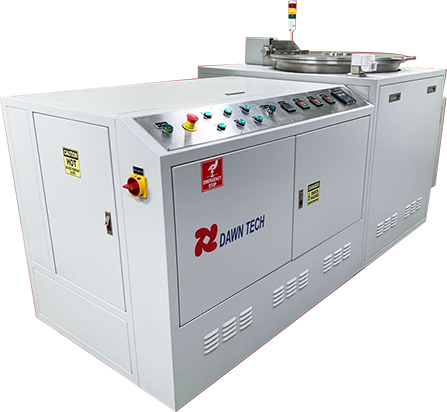
This is the specific problem that Parylene Coating in Malaysia and Singapore solves. Because the application happens in a vacuum chamber through a gas-phase process, it doesn’t “drip” or “run.” It builds up atom by atom. The result is a truly conformal layer that wraps around every lead, under every chip, and into every microscopic crevice with the exact same thickness. When the humidity hits 90%, there simply isn’t a hole for the moisture to find.
The Role of Nano Coating in the Mix
Of course, Parylene isn’t the only tool in the box. Many manufacturers are starting to use nano coating as a clever secondary defense. While Parylene is the “heavy armor” for the internals, a nano coating is often applied to the outer surfaces or ports of a device.
Because nano coating is exceptionally good at repelling liquid (the “lotus effect” where water beads up and rolls off), it keeps the bulk of the moisture away from the device’s exterior. Using these two together gives a product a layered defense: the nano coating fights the initial splashes, while the Parylene ensures the delicate internal logic never sees a single molecule of water.
Where the High Stakes Live
It isn’t just about consumer gadgets anymore. The demand is coming from sectors where failure isn’t an option:
- The MedTech Boom: Singapore is a global center for medical innovation. When you’re designing a cardiac stent or an implantable pump, you need a coating that is biocompatible and won’t degrade inside the patient.
- The EV Transition: In Malaysia, the automotive supply chain is racing to keep up with electric vehicle demands. The sensors used in these cars have to survive extreme heat and chemical exposure things that would eat through standard protection in months.
- Aerospace Logistics: For parts moving through regional flight paths, the constant pressure changes and condensation cycles make the pinhole-free nature of Parylene a non-negotiable requirement.
The Human Side of the Machine
Despite how high-tech the vacuum chambers are, the process still requires a human touch. You can’t just throw a bag of circuit boards into a machine and walk away. Someone has to manually mask the connectors that shouldn’t be coated (otherwise, they won’t conduct electricity) and calibrate the gas flow based on the specific geometry of the parts.
This level of precision is why the choice of partner matters so much. In our corner of the world, Dawn Tech has become a go-to for many of these complex jobs. The team at Dawn Tech doesn’t just treat this as a “spray and pray” service. They understand that a sensor for a deep-sea probe needs a different approach than a circuit for a smart wearable. Having that local expertise knowing exactly how a specific material will react to the regional climate is what separates a successful production run from a bin full of rejects.
At the end of the day, manufacturing is getting more expensive and components are getting smaller. We are reaching a point where the protection is just as important as the silicon itself. As the “Silicon Valley of the East” continues to grow, the companies that win won’t just be the ones with the fastest processors, but the ones whose products actually survive the trip from the factory to the real world. If you’re building hardware today, it’s worth asking: is your protection designed for a lab, or is it built for the reality of the tropics?