
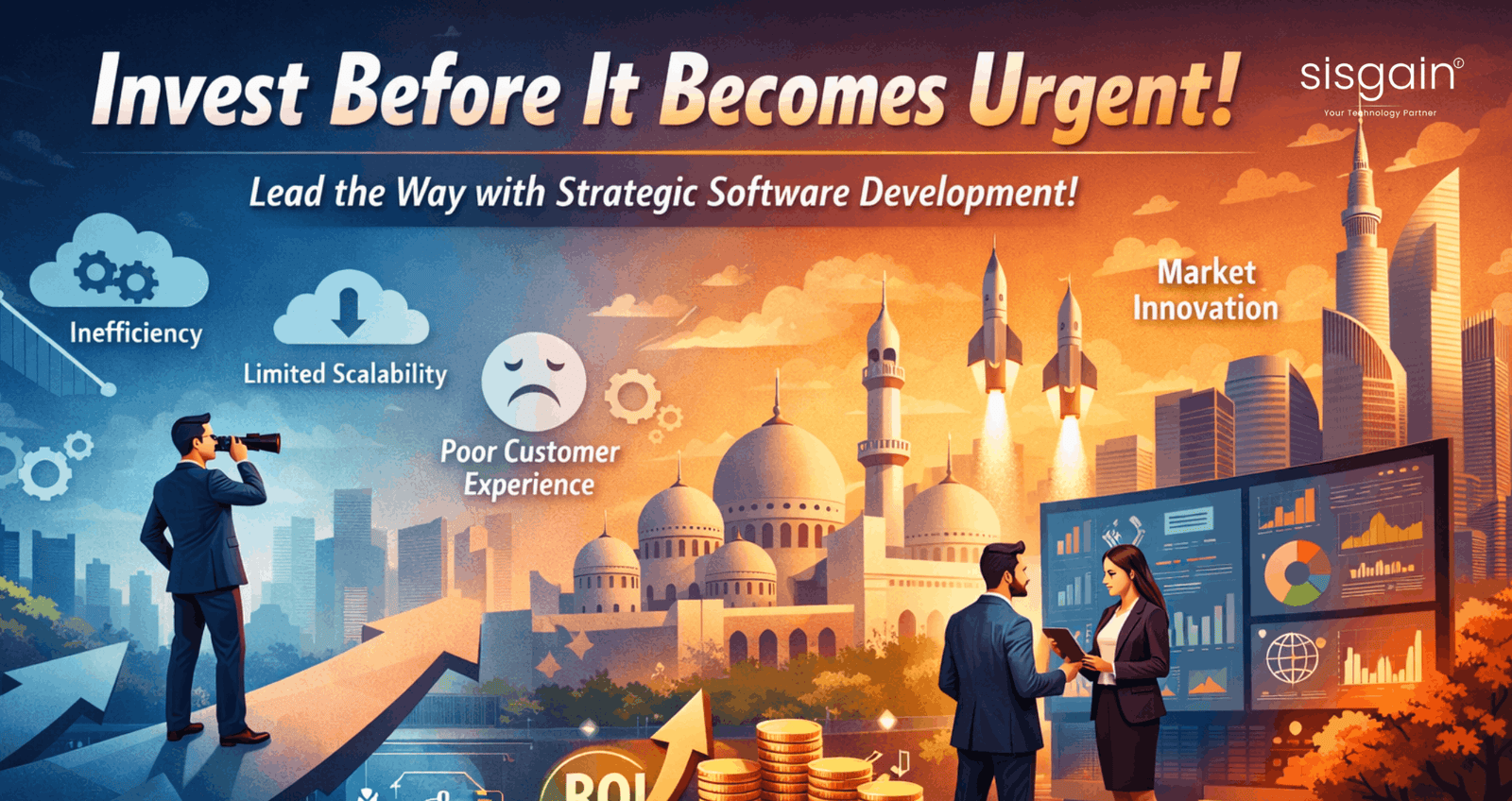
Why Timing Matters in Software Investment
In today’s hyper-digital economy, timing is everything. Businesses no longer compete only on price or product quality—they compete on technology, speed, and customer experience. Studies consistently show that organizations investing early in digital transformation outperform late adopters in revenue growth, operational efficiency, and customer retention. Yet many CEOs and founders hesitate when it comes to investing in software development services, often waiting until inefficiencies, lost customers, or scaling issues force urgent action.
The reality is simple: the cost of delayed investment is usually far greater than the cost of strategic planning. Whether you’re a startup validating your MVP, a mid-sized enterprise automating operations, or a regional leader expanding into new markets, knowing when to invest in software development services determines whether you lead your market or struggle to catch up.
This comprehensive guide is designed for CEOs, CTOs, founders, digital transformation leaders, and operations heads who want clarity. You’ll learn the clear business signals that indicate it’s time to invest, how to evaluate ROI, when custom solutions outperform off-the-shelf software, and how to choose the right partner.
What Are Software Development Services?
Before determining when to invest, it is essential to understand what software development services truly encompass. Many executives assume it simply means building an app or website. In reality, it is a strategic capability that includes architecture design, system integration, cloud infrastructure, enterprise application development, API frameworks, cybersecurity implementation, AI integration, and ongoing technical optimization.
A reliable software development partner does more than write code. A professional software development company evaluates your workflows, identifies bottlenecks, designs scalable systems, and aligns technology with long-term business goals. This consultative approach ensures your software becomes an asset rather than a cost center.
Software development services may include custom enterprise resource planning systems, SaaS platforms, CRM integrations, fintech platforms, healthcare management systems, logistics automation software, and AI-driven analytics dashboards. Organizations investing strategically in these services gain better operational visibility, reduced human error, improved data accuracy, and enhanced scalability.
Understanding the breadth of these services helps decision-makers realize that investment is not about building a product—it is about building infrastructure for sustainable growth.
Clear Signs It’s Time to Invest in Software Development Services
Business leaders often struggle to identify the exact tipping point. However, there are clear signals that indicate the right time to invest in software development services has arrived. Ignoring these signs can slow growth and increase long-term costs.
Your Operations Are Becoming Inefficient
Operational inefficiency is one of the strongest indicators that investment is overdue. When teams rely heavily on spreadsheets, manual reporting, disconnected tools, and repetitive data entry, productivity suffers. Errors increase, decision-making slows down, and employees spend time on low-value tasks rather than strategic initiatives.
Investing in software development services at this stage allows automation of repetitive workflows, integration of disconnected systems, and centralized data management. For example, automating billing, procurement, HR processes, or reporting systems can significantly reduce operational costs and human error.
A mature custom software development company assesses these inefficiencies and builds tailored solutions aligned with your processes instead of forcing you to adapt to rigid software constraints. Businesses that automate early typically experience measurable improvements in speed, transparency, and profitability.
Your Business Is Scaling Faster Than Your Systems
Growth is exciting, but rapid expansion can expose system limitations. As customer demand increases, outdated software may struggle to handle traffic, transactions, or data loads. Performance slowdowns, server crashes, and poor user experiences often signal that foundational systems were not built for scale.
This is a critical moment to invest in software development services focused on scalability and cloud-native architecture. Modern platforms allow elastic scaling, API-driven integrations, and modular expansions. A forward-thinking software development company ensures your infrastructure supports future growth rather than becoming a bottleneck.
Waiting until systems fail can lead to rushed migrations and higher costs. Proactive investment ensures smooth expansion without compromising performance.
You’re Losing Competitive Advantage
Markets evolve quickly. Competitors adopt AI analytics, automation, customer personalization engines, and digital self-service platforms. If your business relies on outdated systems, customers may perceive your brand as slow or disconnected.
Investing in software development services restores competitive positioning by enabling innovation. Whether it is predictive analytics, intelligent dashboards, or integrated mobile platforms, modern technology allows companies to offer faster, more personalized services.
Businesses that treat technology as strategy—not just support—consistently outperform competitors. Recognizing this shift early is key to maintaining leadership.
Customer Experience Is Suffering
Customer expectations have transformed dramatically. Users demand instant responses, seamless mobile experiences, real-time tracking, and personalized communication. If complaints are rising or retention rates are declining due to slow systems, fragmented communication, or poor digital interfaces, it is time to act.
Strategic software development services improve user journeys, integrate customer data across channels, and enable real-time engagement tools. Investing here directly impacts revenue because customer experience strongly correlates with retention and lifetime value.
Modern businesses understand that digital convenience is not optional—it is foundational.
Off-the-Shelf Software No Longer Fits
Off-the-shelf solutions are often suitable during early business stages. However, as operations become complex, these platforms may limit customization, integration, and data control. Subscription costs can escalate without delivering true flexibility.
This is where partnering with a custom software development company becomes strategic. Custom-built solutions align with unique workflows, compliance requirements, and industry-specific needs. Instead of adapting your business to generic software, your technology adapts to you.
Recognizing this inflection point prevents long-term inefficiencies and dependency on restrictive tools.
When Custom Software Makes More Sense Than Ready-Made Tools
Not every business requires custom solutions immediately. However, there are scenarios where investing in tailored software development services provides superior ROI compared to ready-made products.
If your business model involves unique processes, proprietary algorithms, industry-specific compliance standards, or multi-system integrations, off-the-shelf platforms may not scale effectively. Custom software allows full control over architecture, data security, and feature prioritization.
Below is a strategic comparison:
| Criteria | Off-the-Shelf Software | Custom Software Development |
|---|---|---|
| Initial Cost | Lower upfront | Higher initial investment |
| Long-Term ROI | Limited scalability | High scalability & ownership |
| Customization | Restricted | Fully flexible |
| Integration | Often complex | Seamless API-driven |
| Competitive Edge | Limited | Strong differentiation |
Organizations working with a skilled custom software development company gain tailored architecture, better data control, and long-term scalability. The initial investment may be higher, but ownership and strategic flexibility typically generate higher returns over time.
Business Stages That Require Software Investment
Investment timing also depends on your growth stage. Each phase of business maturity demands different types of software development services.
Startup Stage
Startups require MVP development, agile product iterations, and scalable architecture planning. Early investment ensures your foundation can support user growth and investor expectations. Building scalable infrastructure from day one avoids costly rebuilding later.
Growth Stage
During expansion, automation becomes critical. Customer relationship management systems, analytics dashboards, workflow automation, and integrated finance systems support operational control. Strategic software development services reduce chaos and enable data-driven decisions.
Expansion Stage
Enterprises expanding into new markets or regions require multi-location integration, advanced cybersecurity, and cloud-native scalability. In regions witnessing strong Software Development Growth in Abu Dhabi, early adopters gain competitive advantages through digital transformation initiatives and government-backed innovation ecosystems.
Recognizing your stage ensures investments align with strategic goals rather than reactive fixes.
Financial Perspective: Is Now the Right Time?
Financial readiness is a common concern. Leaders often ask whether they can afford investment in software development services. A better question may be whether they can afford not to.
Cost evaluation should include operational inefficiencies, lost customers, manual errors, and limited scalability. Modern ROI frameworks calculate long-term gains rather than focusing solely on upfront expense.
Read More :- Best Logistics and Transportation Software UAE 2026
Consider the following evaluation framework:
| Evaluation Area | Key Question |
|---|---|
| Operational Cost | Are inefficiencies increasing expenses? |
| Revenue Impact | Are customers leaving due to poor digital experience? |
| Scalability | Can current systems support 2x growth? |
| Compliance Risk | Are manual processes increasing risk exposure? |
A professional software development company can help conduct technical audits and ROI assessments before development begins. This consultative approach aligns with E-E-A-T principles by emphasizing expertise, transparency, and strategic evaluation.
Risks of Waiting Too Long
Delaying investment in software development services creates cumulative technical debt. Outdated systems become harder and more expensive to replace. Data silos increase security risks. Competitors widen the innovation gap.
Additionally, emergency system failures often require rushed development decisions, leading to higher costs and compromised quality. Businesses that delay transformation may face declining customer trust and operational instability.
Strategic investment prevents crisis-driven spending and ensures controlled growth.
Industry-Specific Triggers for Software Development
Different industries experience unique triggers for adopting software development services. Healthcare requires digital record integration and compliance systems. Fintech demands secure transaction platforms and regulatory adherence. Retail requires omnichannel integration and inventory automation. Logistics depends on real-time tracking and route optimization systems.
Regions experiencing strong Software Development Growth in Abu Dhabi demonstrate how government initiatives and innovation hubs accelerate enterprise digital adoption. Companies operating in such ecosystems must adapt quickly to remain competitive.
Industry-specific triggers often accelerate the decision timeline. Recognizing these pressures allows proactive planning rather than reactive responses.
How to Choose the Right Software Development Partner
Selecting the right partner significantly impacts success. A reputable software development company provides strategic consultation, transparent processes, agile methodologies, and post-launch support.
Experience across industries, strong technical architecture skills, cybersecurity expertise, and scalable cloud knowledge are essential. Collaboration, communication, and long-term partnership mindset distinguish reliable providers from transactional vendors.
A capable custom software development company ensures that development aligns with business KPIs, compliance standards, and future expansion plans. Due diligence, case studies, technical audits, and proof-of-concept discussions reduce project risk.
Future-Proofing Your Investment
Technology evolves rapidly. Future-ready software development services prioritize API-first architecture, AI integration, cloud scalability, cybersecurity frameworks, and modular expansion capabilities.
Future-proofing means designing systems that evolve with market demands. Integration capabilities allow seamless upgrades. Cloud-native infrastructure supports elasticity. AI-driven analytics provide predictive insights.
Businesses investing strategically today position themselves for tomorrow’s innovation landscape. In competitive regions experiencing Software Development Growth in Abu Dhabi, future-focused architecture differentiates market leaders from followers.
Conclusion: Invest Before It Becomes Urgent
Knowing when to invest in software development services is less about budget cycles and more about strategic foresight. If operations are inefficient, scalability is constrained, customer experience is declining, or competitors are innovating faster, the time to act is now.
Technology investment should be proactive, not reactive. Partnering with a trusted software development company enables structured planning, ROI evaluation, and scalable architecture design. Collaborating with a specialized custom software development company ensures solutions align with your unique business model.
As digital ecosystems expand and markets such as those demonstrating Software Development Growth in Abu Dhabi accelerate innovation, early adopters will define the future.
The question is no longer whether to invest in software development services. The real question is whether you are prepared to lead—or risk falling behind.