
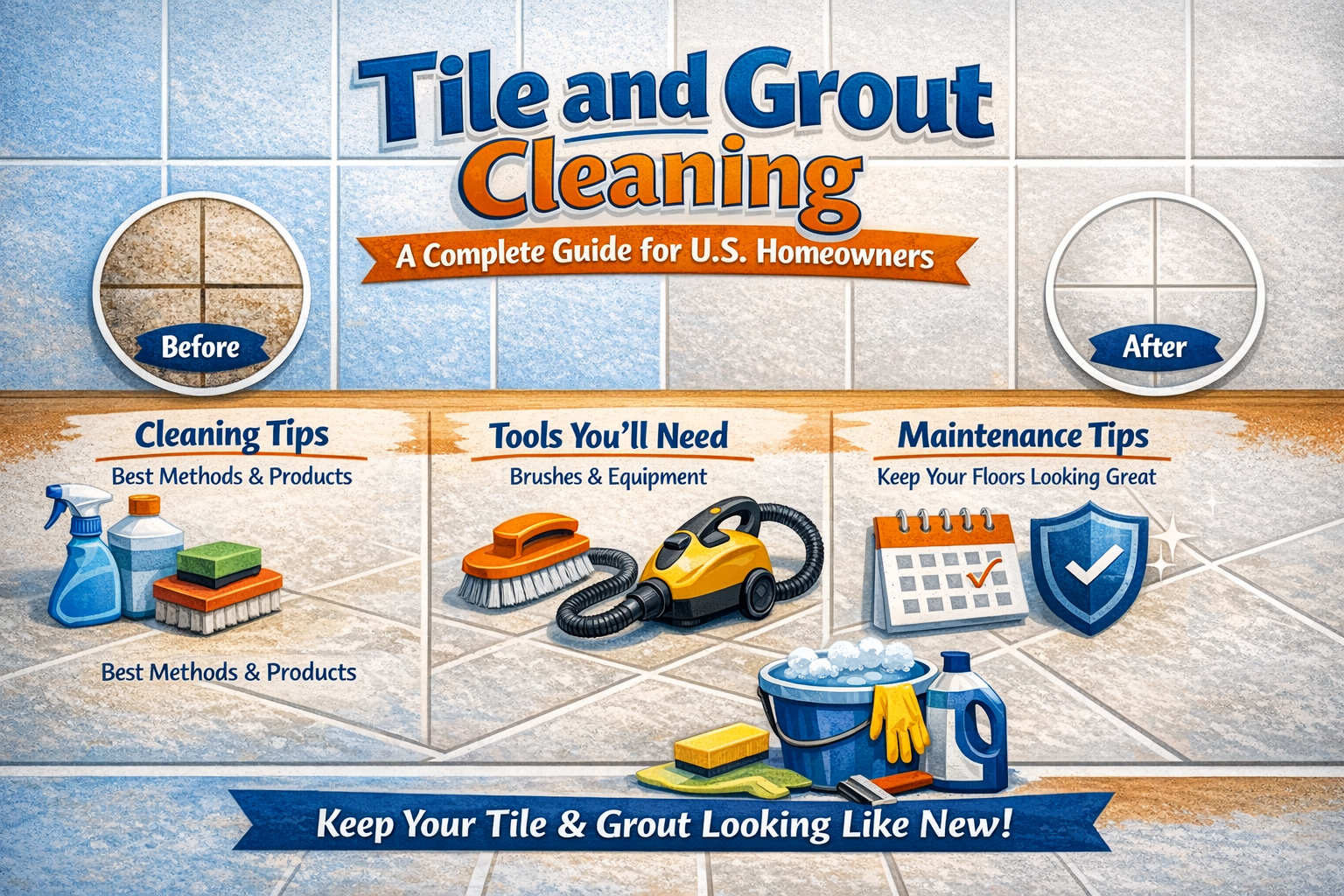
Tile floors, backsplashes, and bathroom walls are popular in U.S. homes because they are durable, moisture-resistant, and stylish. However, while tiles themselves are relatively easy to maintain, grout lines often tell a different story. Over time, grout absorbs dirt, grease, soap residue, and moisture, making tile and grout cleaning one of the most challenging household tasks.
This complete guide explains everything U.S. homeowners need to know about tile and grout cleaning, including why grout gets dirty, how to clean it effectively, what type of grout cleaner works best, and how to keep grout looking fresh for years.
What Is Tile and Grout Cleaning?
Tile and grout cleaning is the process of removing dirt, stains, bacteria, and buildup from tile surfaces and the porous grout lines between them. Unlike tile, grout is highly absorbent, which means it traps moisture, spills, and contaminants easily.
Regular cleaning helps:
- Restore the original color of grout
- Improve indoor hygiene
- Prevent mold and mildew growth
- Extend the life of tile surfaces
Why Grout Gets Dirty So Easily
Grout is typically made from cement-based materials, which are naturally porous. This makes it vulnerable to:
- Foot traffic dirt in hallways and entryways
- Grease and food spills in kitchens
- Soap scum and moisture in bathrooms
- Mold and mildew in damp areas
Without proper tile and grout cleaning, these contaminants settle deep into grout lines, making regular mopping ineffective.
Types of Tile and Grout Found in U.S. Homes
Understanding your tile type helps you choose the right tile grout cleaner:
- Ceramic and porcelain tile – Most common and durable
- Natural stone tile (marble, travertine, slate) – Requires gentle cleaners
- Glass tile – Easy to clean but grout still needs attention
Using the wrong grout cleaner, especially on natural stone, can cause damage or discoloration.
DIY Tile and Grout Cleaning Methods
Many homeowners start with DIY solutions before trying store-bought products.
1. Baking Soda and Vinegar
A paste of baking soda and water scrubbed into grout lines, followed by vinegar, can loosen surface stains. This works best for light discoloration but may not remove deep stains.
2. Hydrogen Peroxide
Hydrogen peroxide is effective for whitening grout and killing bacteria. Apply it directly or mix with baking soda for tougher stains.
3. Steam Cleaning
Steam can penetrate grout pores and loosen dirt without chemicals. While effective, it may not fully remove set-in stains.
DIY methods are affordable but often limited in effectiveness for heavily soiled grout.
Using a Commercial Grout Cleaner
When DIY methods fall short, a commercial grout cleaner is usually more effective. These products are designed to break down grease, grime, and bacteria embedded deep in grout lines.
What to Look for in the Best Grout Cleaner
- pH-balanced formulas
- Non-toxic or low-odor options for indoor use
- Safe for your specific tile type
- Mold and mildew resistance
The best grout cleaner is one that cleans thoroughly without damaging tile or weakening grout over time.
How to Use a Tile Grout Cleaner Properly
To get the best results from any tile grout cleaner, follow these steps:
- Sweep or vacuum the area to remove loose dirt
- Apply the grout cleaner evenly along grout lines
- Let it sit for the recommended time
- Scrub with a stiff-bristle or grout brush
- Rinse thoroughly with clean water
- Dry the area to prevent moisture buildup
Consistency matters—regular tile and grout cleaning prevents stains from becoming permanent.
Preventing Future Grout Stains
Cleaning grout is important, but prevention makes maintenance easier.
Seal Your Grout
Applying a grout sealer creates a protective barrier that reduces absorption. Most experts recommend resealing grout every 1–2 years.
Clean Spills Quickly
Wiping spills immediately prevents stains from soaking into grout.
Use Gentle Cleaners
Harsh chemicals can degrade grout over time, making it more porous.
How Often Should Tile and Grout Be Cleaned?
For most U.S. households:
- Light cleaning: Weekly or biweekly
- Deep tile and grout cleaning: Every 3–6 months
- Grout sealing: Every 12–24 months
High-traffic or moisture-prone areas may require more frequent attention.
Common Tile and Grout Cleaning Mistakes
Avoid these common errors:
- Using bleach repeatedly, which weakens grout
- Scrubbing with metal brushes that scratch tile
- Ignoring moisture buildup in bathrooms
- Skipping grout sealing after deep cleaning
FAQs About Tile and Grout Cleaning
What is the best grout cleaner for home use?
The best grout cleaner depends on your tile type and stain severity. Look for pH-neutral or oxygen-based cleaners that are safe for indoor use and effective against mold and dirt.
Can I use the same tile grout cleaner on all surfaces?
Not always. Natural stone tiles require specialized cleaners. Always check the label before using any grout cleaner.
How do I whiten discolored grout?
Hydrogen peroxide-based cleaners or oxygen bleach products work well. Regular tile and grout cleaning combined with sealing helps maintain white grout.
Is steam cleaning safe for grout?
Yes, steam cleaning is generally safe and chemical-free, but it may not remove deeply embedded stains without a grout cleaner.
How long does grout cleaning last?
Results can last several months, especially if grout is sealed and maintained with regular cleaning.
Final Thoughts
Tile and grout cleaning is an essential part of maintaining a clean, healthy, and visually appealing home. While tile surfaces are durable, grout requires special care due to its porous nature. Using the right tile grout cleaner, choosing the best grout cleaner for your needs, and maintaining a consistent cleaning routine can dramatically extend the life of your floors and walls.
With proper care, your tile and grout can look fresh, clean, and beautiful for years to come.