
Introduction
The digital advertising landscape is evolving rapidly, and one of the most transformative developments in recent years is the rise of retail media platforms. As third-party cookies decline and brands seek more measurable, data-driven advertising channels, retail media has emerged as a powerful solution that benefits retailers, brands, and consumers alike.
Definition
A Retail Media Platform is a digital advertising ecosystem operated by a retailer that enables brands to promote their products to shoppers across the retailer’s owned channels – such as websites, mobile apps, in-store displays, and off-site media – using the retailer’s first-party customer and shopping data to deliver targeted, measurable, and commerce-driven advertising.
What Is a Retail Media Platform?
A retail media platform is an advertising ecosystem owned and operated by a retailer that allows brands to promote their products directly to shoppers across the retailer’s digital and physical touchpoints. These platforms leverage first-party shopper data, such as purchase history, browsing behavior, and loyalty insights, to deliver highly targeted and relevant ads.
Retail media ads typically appear on:
- Retailer websites and mobile apps
- Sponsored product listings and search results
- On-site display banners
- Off-site channels like social media, CTV, and programmatic networks
- In-store digital screens and point-of-sale systems
By reaching consumers at or near the point of purchase, retail media platforms close the gap between advertising and conversion.
Why Retail Media Is Growing So Fast
Retail media is one of the fastest-growing segments in digital advertising, and for good reason.
1. Access to First-Party Data
Retailers have direct relationships with consumers and collect high-quality, consented first-party data. This enables precise targeting without relying on third-party cookies, making retail media highly future-proof.
2. High Purchase Intent
Unlike traditional digital ads, retail media reaches consumers who are already shopping or researching products. This results in higher conversion rates and stronger return on ad spend (ROAS).
3. Closed-Loop Measurement
Retail media platforms allow advertisers to track the entire journey – from ad exposure to purchase – using real sales data. This level of attribution is extremely valuable for performance marketers.
4. New Revenue Streams for Retailers
Retailers can monetize their digital real estate and in-store assets, creating a high-margin revenue channel that complements core retail operations.
Key Components of a Retail Media Platform
A successful retail media platform is built on several critical components:
Ad Formats
Retail media platforms support multiple ad formats, including:
- Sponsored products
- Sponsored brands
- Display and video ads
- Native and shoppable content
These formats integrate seamlessly into the shopping experience, maintaining relevance and minimizing disruption.
Audience Targeting
Advanced platforms allow advertisers to target audiences based on:
- Purchase history
- Category interest
- Brand affinity
- Demographics and location
- Loyalty program status
This ensures ads are shown to the most relevant shoppers.
Self-Serve and Managed Services
Many retail media platforms offer self-serve dashboards for brands to plan, launch, and optimize campaigns independently, alongside managed services for more complex or strategic activations.
Measurement and Analytics
Robust reporting tools provide insights into impressions, clicks, conversions, sales lift, and incremental revenue, enabling continuous optimization.
Benefits for Brands
For brands, retail media platforms offer unique advantages that traditional advertising channels struggle to match.
- Improved ROAS: Ads are shown to high-intent shoppers, leading to better performance.
- Full-Funnel Impact: Retail media supports awareness, consideration, and conversion within a single ecosystem.
- Actionable Insights: Brands gain access to shopper behavior data that can inform broader marketing and product strategies.
- Stronger Retail Partnerships: Investing in retail media often strengthens relationships with retail partners and improves shelf visibility.
Benefits for Retailers
Retailers are uniquely positioned to become media owners, and retail media platforms unlock significant value.
- High-Margin Revenue: Advertising revenue typically delivers higher margins than product sales.
- Data Monetization: Retailers can responsibly monetize their data without selling it directly.
- Enhanced Shopper Experience: Relevant ads can help shoppers discover products they genuinely need.
- Competitive Differentiation: A strong retail media offering attracts premium brands and long-term partnerships.
In-Store Retail Media: Bridging Digital and Physical
Retail media is no longer limited to online environments. In-store retail media – including digital screens, smart shelves, and POS integrations – extends advertising into the physical shopping journey.
When combined with online data, in-store retail media enables omnichannel targeting and measurement, creating a unified commerce experience across digital and physical worlds.
Challenges in Retail Media Platforms
Despite its rapid growth, retail media comes with challenges that platforms must address:
- Fragmentation: Brands often manage campaigns across multiple retailers with different tools and metrics.
- Standardization: Lack of universal measurement standards can complicate cross-platform comparisons.
- Ad Fatigue: Overloading shoppers with ads can negatively impact the user experience.
- Technical Complexity: Building and scaling a robust platform requires advanced technology and data governance.
Leading retail media platforms are investing heavily in automation, AI-driven optimization, and standardized reporting to overcome these challenges.
The Future of Retail Media Platforms
The future of retail media is deeply connected to innovation in data, technology, and shopper experience. Key trends shaping the next phase include:
- AI-Powered Targeting and Bidding
- Retail Media Networks (RMNs) expanding off-site
- Integration with CTV and video commerce
- Greater focus on incrementality and measurement standards
- Deeper personalization across omnichannel touchpoints
As commerce and media continue to converge, retail media platforms will play a central role in how brands connect with consumers.
Growth Rate of Retail Media Platform Market
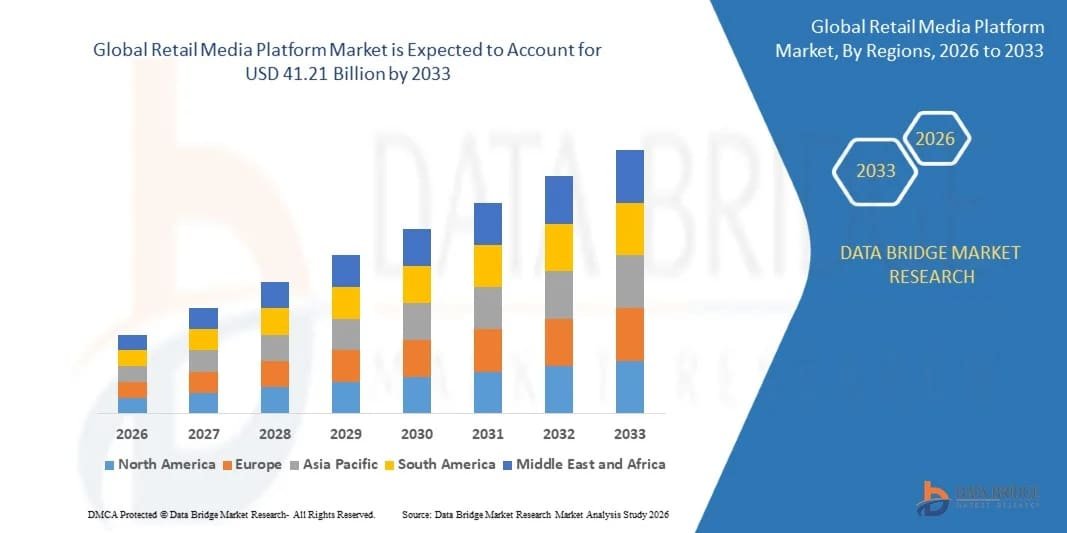
According to Data Bridge Market Research, the retail media platform market was estimated to be worth USD 20.71 billion in 2025 and is projected to grow at a compound annual growth rate (CAGR) of 8.98% to reach USD 41.21 billion by 2033.
Learn More: https://www.databridgemarketresearch.com/reports/global-retail-media-platform-market
Conclusion
Retail media platforms are redefining digital advertising by combining the power of first-party data, high-intent audiences, and closed-loop measurement. For retailers, they unlock new revenue and strategic advantages. For brands, they offer performance, transparency, and proximity to the point of purchase.