In today’s highly competitive digital ecosystem, businesses can no longer rely solely on organic reach to acquire customers. Paid digital channels have become essential for achieving predictable growth, immediate visibility, and measurable results. Among these channels, Pay-Per-Click Advertising has emerged as one of the most effective and controllable marketing strategies for businesses of all sizes.
This in-depth guide explains how PPC works, why it matters, and how businesses can use it strategically to maximize returns while controlling costs. Whether you are a startup, a mid-sized enterprise, or an established brand, understanding PPC can help you unlock scalable growth.
What Is Pay-Per-Click Advertising?
Pay-Per-Click Advertising is a digital advertising model where advertisers pay a fee each time their ad is clicked. Instead of earning traffic organically, businesses buy targeted visits from platforms such as search engines, social networks, and content websites.
The most common PPC format is search advertising, where ads appear at the top of search engine results pages when users search for specific keywords. Other formats include display ads, shopping ads, video ads, and social media ads.
This model allows advertisers to:
- Target users with high purchase intent
- Control budgets with precision
- Track performance in real time
How Pay-Per-Click Advertising Works
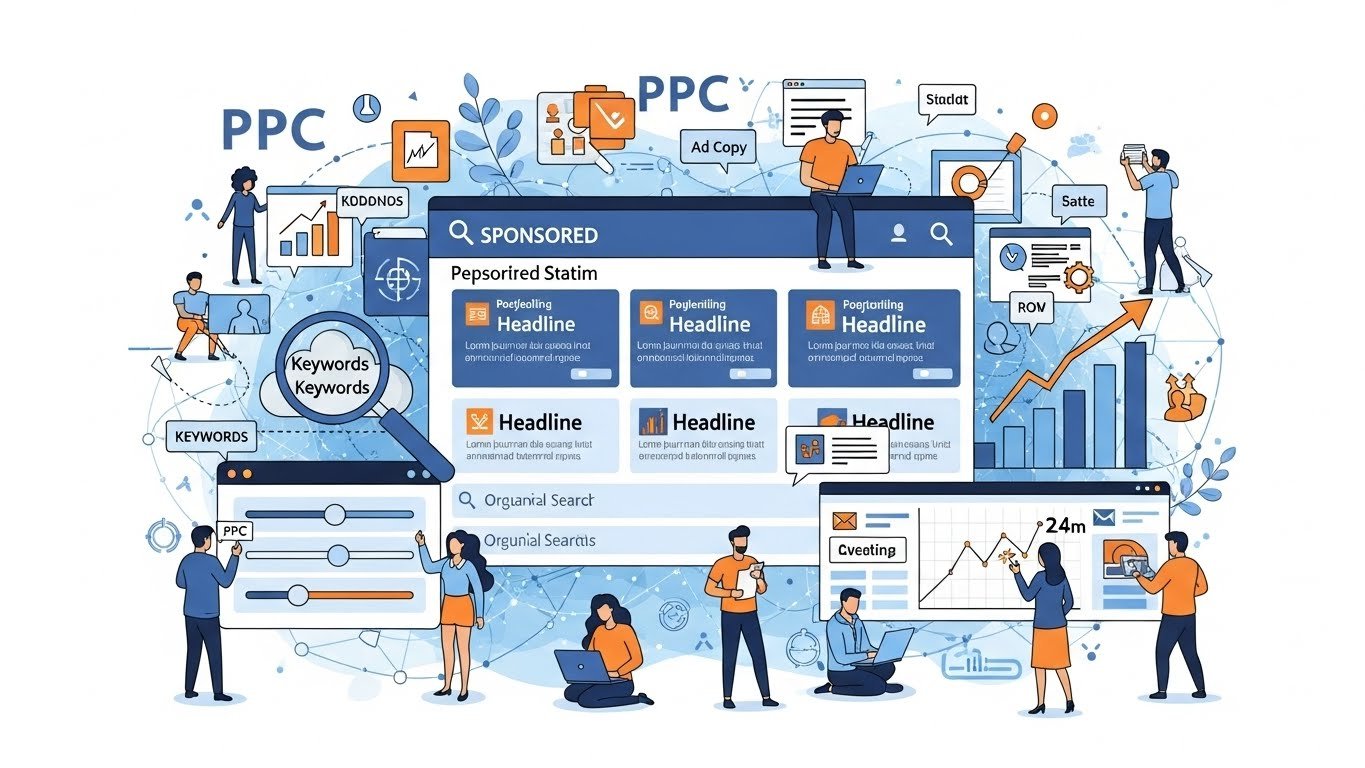
PPC operates on an auction-based system. Advertisers bid on keywords or audience segments, and platforms decide which ads appear based on several factors.
Key Components of the PPC Auction
- Keyword Selection
Advertisers choose keywords relevant to their product or service. - Bid Amount
This is the maximum amount an advertiser is willing to pay for a click. - Quality Score
Platforms evaluate ad relevance, expected click-through rate, and landing page experience. - Ad Rank
Ad Rank determines ad placement and is calculated using bid value and quality score.
The advertiser does not always pay the highest bid; instead, they pay just enough to outrank the competitor below them.
Types of Pay-Per-Click Advertising
Search Ads
Text ads that appear on search engine results pages when users actively search for products or services.
Display Ads
Visual banner ads shown across websites, apps, and online platforms.
Shopping Ads
Product-based ads displaying images, prices, and brand names directly in search results.
Video Ads
Short promotional videos displayed on video-streaming platforms and partner networks.
Social Media Ads
Paid placements within social platforms based on user interests, behaviors, and demographics.
Each format serves a different purpose within the customer journey, from awareness to conversion.
Benefits of Pay-Per-Click Advertising
Immediate Visibility
Unlike organic SEO, PPC delivers instant placement at the top of search results.
Highly Targeted Reach
Advertisers can target users by:
- Keywords
- Location
- Device
- Interests
- Behavior
Full Budget Control
Daily and monthly budgets can be adjusted at any time without long-term commitments.
Measurable ROI
Every impression, click, and conversion can be tracked and analyzed.
Scalability
Successful campaigns can be scaled quickly by increasing budgets or expanding keywords.
Understanding PPC Costs and Budgeting
PPC costs vary based on:
- Industry competitiveness
- Keyword demand
- Geographic location
- Platform used
High-competition industries often see higher cost-per-click rates, while niche markets can achieve lower acquisition costs.
Effective budget management focuses on:
- Eliminating irrelevant clicks
- Improving quality scores
- Optimizing landing pages
- Tracking conversion value, not just traffic
The Role of Landing Pages in PPC Success
A PPC campaign is only as strong as its landing page. Sending paid traffic to irrelevant or poorly optimized pages results in wasted spend.
Key Landing Page Best Practices
- Clear headline aligned with ad copy
- Strong call-to-action
- Fast loading speed
- Mobile responsiveness
- Minimal distractions
Optimized landing pages increase conversion rates and improve overall campaign efficiency.
Common PPC Mistakes to Avoid
Many businesses fail to achieve results due to avoidable errors.
Frequent Pitfalls
- Targeting broad, irrelevant keywords
- Ignoring negative keywords
- Sending traffic to generic homepages
- Not tracking conversions properly
- Focusing only on clicks instead of revenue
Avoiding these mistakes can significantly improve performance without increasing ad spend.
PPC vs SEO: Understanding the Difference
PPC and SEO are often compared, but they serve different roles.
| PPC | SEO |
|---|---|
| Immediate results | Long-term growth |
| Paid traffic | Organic traffic |
| Full control over visibility | Dependent on algorithms |
| Stops when budget stops | Compounds over time |
A balanced digital strategy typically includes both.
How an Internet Advertising Company Adds Value
Managing PPC campaigns requires technical expertise, ongoing optimization, and data analysis. An experienced internet advertising company helps businesses avoid costly trial-and-error.
What a Professional Agency Provides
- Strategic keyword research
- Competitor analysis
- Ad copy optimization
- Conversion tracking setup
- Continuous performance optimization
By leveraging expert insights and platform knowledge, businesses achieve better ROI and faster growth.
Why Businesses Trust Adomantra for PPC Campaigns
Adomantra follows a performance-driven approach that aligns paid media strategies with business objectives.
Adomantra’s PPC Approach
- Data-backed campaign planning
- Industry-specific targeting strategies
- Transparent reporting and insights
- Focus on lead quality and conversions
- Continuous optimization for efficiency
As a growth-focused internet advertising company, Adomantra prioritizes long-term value over short-term clicks.
Measuring PPC Success
Success should not be measured by traffic alone.
Key Performance Indicators
- Click-through rate
- Conversion rate
- Cost per acquisition
- Return on ad spend
- Lead quality
Advanced tracking ensures every campaign decision is based on actionable data.
The Future of Pay-Per-Click Advertising
PPC is evolving rapidly with:
- AI-driven bidding strategies
- Audience-based targeting
- Automation and smart campaigns
- Privacy-focused tracking solutions
Businesses that adapt early will gain a competitive edge in an increasingly crowded digital marketplace.
Final Thoughts
Pay-Per-Click Advertising remains one of the most powerful tools for businesses seeking immediate visibility, measurable results, and scalable growth. When executed strategically, PPC delivers consistent leads, controlled costs, and strong ROI.
Partnering with a trusted internet advertising company like Adomantra ensures campaigns are optimized for performance, efficiency, and long-term success in a competitive digital environment.
Frequently Asked Questions (FAQs) on Pay-Per-Click Advertising
What is Pay-Per-Click Advertising?
Pay-Per-Click Advertising is a digital marketing model in which advertisers pay a fee each time a user clicks on their ad. It allows businesses to gain instant visibility on search engines and digital platforms by bidding on relevant keywords or audiences.
How does Pay-Per-Click Advertising work?
PPC works through an auction-based system. Advertisers bid on keywords or audience segments, and platforms rank ads based on bid value and quality score. Ads appear when users search or browse relevant content, and advertisers pay only when a click occurs.
Why is Pay-Per-Click Advertising important for businesses?
Pay-Per-Click Advertising helps businesses reach high-intent users instantly, control advertising budgets, measure performance accurately, and generate leads or sales faster than organic methods.
Is Pay-Per-Click Advertising suitable for small businesses?
Yes, PPC is highly suitable for small businesses because it allows full budget control, precise targeting, and measurable ROI. Even with limited budgets, businesses can focus on specific keywords and locations to compete effectively.
How much does Pay-Per-Click Advertising cost?
The cost of PPC depends on factors such as industry competition, keyword demand, targeting options, and ad quality. Businesses can set daily or monthly budgets, ensuring they never exceed planned spending.
What platforms are used for Pay-Per-Click Advertising?
Common PPC platforms include search engines, social media networks, display ad networks, video platforms, and shopping ad channels. Each platform offers different targeting and advertising formats based on business goals.
What is a quality score in PPC?
A quality score is a metric used by advertising platforms to evaluate the relevance of keywords, ad copy, and landing pages. Higher quality scores often result in lower costs per click and better ad placements.
How long does it take to see results from PPC?
PPC campaigns can start generating traffic and leads almost immediately after launch. However, consistent optimization over time improves performance, reduces costs, and increases conversion rates.
What is the difference between PPC and SEO?
PPC delivers immediate paid traffic, while SEO focuses on long-term organic growth. PPC stops when the budget ends, whereas SEO continues to drive traffic over time. Many businesses use both strategies together for balanced growth.
Can PPC campaigns be tracked and measured?
Yes, PPC campaigns are fully measurable. Advertisers can track impressions, clicks, conversions, cost per acquisition, and return on ad spend, allowing data-driven decision-making.
What is conversion tracking in PPC?
Conversion tracking measures user actions after clicking an ad, such as form submissions, purchases, or phone calls. It helps advertisers understand which campaigns deliver real business value.
Why are landing pages important for PPC success?
Landing pages play a crucial role in PPC performance. A relevant, fast, and conversion-focused landing page improves user experience, increases conversion rates, and enhances overall campaign efficiency.
What mistakes should be avoided in Pay-Per-Click Advertising?
Common mistakes include targeting broad keywords, ignoring negative keywords, poor landing page experience, lack of conversion tracking, and focusing only on clicks instead of revenue.
How does an internet advertising company help with PPC?
An internet advertising company provides strategic planning, keyword research, ad optimization, performance tracking, and continuous improvements. This expertise helps businesses achieve higher ROI and avoid wasted ad spend.
When should a business hire a PPC agency?
A business should consider hiring a PPC agency when campaigns become complex, budgets increase, or in-house expertise is limited. Professional management ensures scalability and consistent performance.
Is Pay-Per-Click Advertising scalable?
Yes, PPC is highly scalable. Businesses can increase budgets, expand keyword targeting, or launch new campaigns once profitable performance is achieved.
Is PPC effective for long-term growth?
While PPC delivers immediate results, long-term growth comes from continuous optimization, data insights, and integration with other digital strategies such as SEO and content marketing.
Read More: blogchowk