
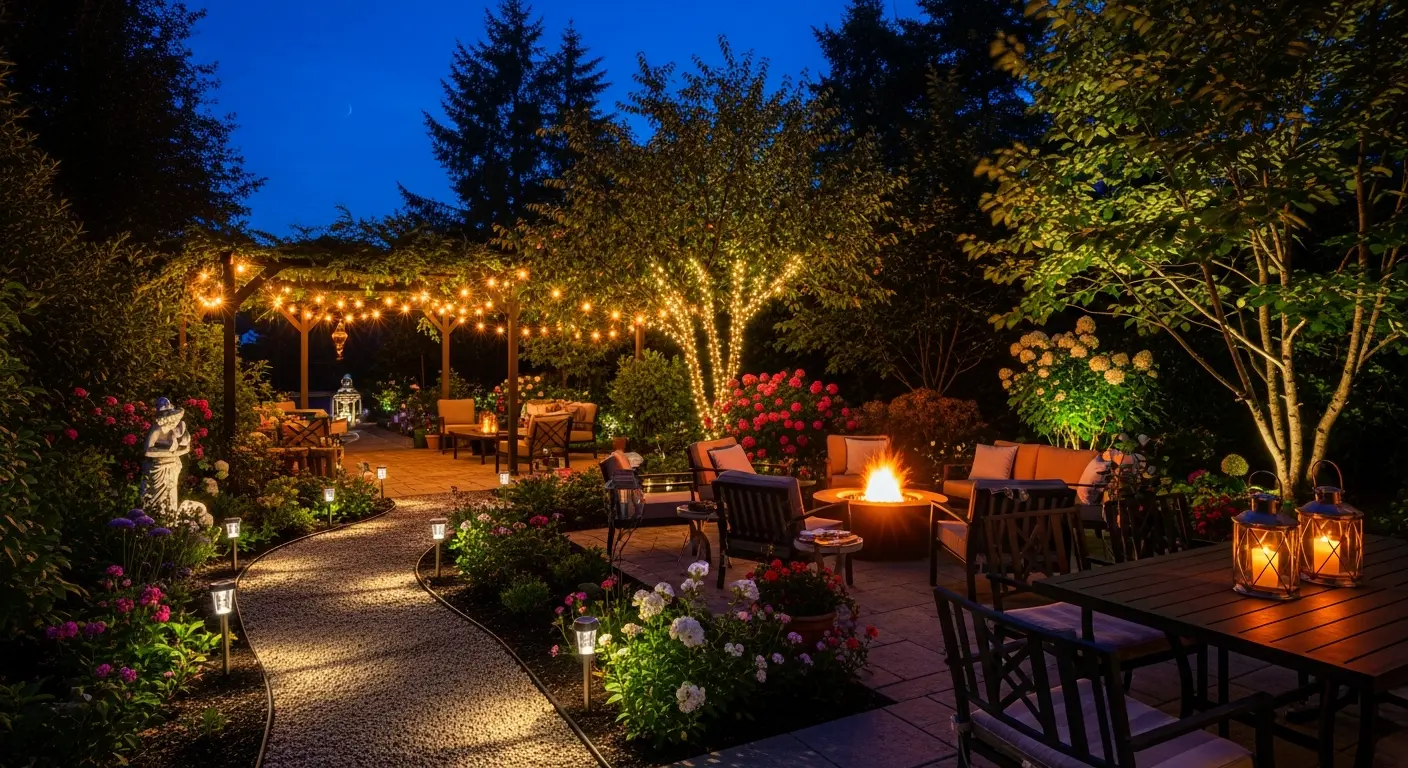
Outdoor garden lights can completely change how your home feels in the evening. The same garden that looks quiet and “done for the day” at sunset can turn into a warm, welcoming space for relaxing, entertaining, and simply enjoying the view from indoors. At Atom Led, we’re all about lighting that’s practical, long-lasting, and beautiful, so this guide is designed to help you choose the right outdoor garden lights, plan a layout that actually works, and avoid the common mistakes that lead to glare, dark patches, or constant maintenance.
Why Outdoor Garden Lights Make Such a Big Difference
Outdoor lighting isn’t just about being able to see where you’re going. It’s also about atmosphere and comfort. A few well-placed lights can make a small garden feel bigger, bring attention to your favourite features, and make pathways safer without turning your whole yard into a floodlit car park.
The best outdoor garden lighting plans balance three things: safety, style, and ease. Safety makes sure steps, edges, and walkways are visible. Style makes the garden look intentional and inviting. Ease means you’re not replacing cheap fittings every season or dealing with complicated wiring every time you want to add a new area.
Start With a Simple Lighting Plan
Before choosing fixtures, take five minutes to think about how you actually use your garden. That alone will guide you to the right mix of lights.
Identify your “zones”
Most gardens have a few natural zones, even if they’re small:
- A path from the back door to the gate, shed, or garage
- A seating or dining area
- Borders, planters, or a lawn edge
- A feature worth highlighting, like a tree, a statue, a water feature, or a textured wall or fence
Once you know the zones, you can choose the lighting style for each one. For example, paths need gentle, consistent guidance lighting. Seating areas need warmer, more comfortable lighting. Feature lighting is all about contrast and focus.
Choose the look: subtle glow or bold drama
If you like a calm, cosy feel, aim for a soft “glow” with warm light and hidden sources. If you like a more modern, striking look, you can create drama with upward spotlights on trees or grazing light across stone walls. Either is great what matters is keeping it consistent so your garden doesn’t look like a mix of different styles.
The Main Types of Outdoor Garden Lights
You don’t need every type of light to get a great result. Most gardens look best with just two or three types used thoughtfully.
Path and walkway lighting
Path lighting is the backbone of a usable garden at night. The goal is to guide your steps without blinding you. Low-level bollards, small spike lights, or subtle downlights near steps work well. Spacing matters more than brightness; a line of softer lights usually looks better than a few harsh bright ones.
Spotlights for features
Spotlights are perfect for highlighting trees, tall plants, architectural shapes, or garden art. Placed low and aimed upward, they create depth and make the garden feel layered. If you have a favourite tree, lighting it from two angles often looks more natural than one single strong beam.
Deck, patio, and seating area lighting
This is where you want comfort. Warm-toned lighting around seating makes people want to stay outside longer. Consider lights under bench edges, subtle wall lights, or concealed lighting that washes across the patio without shining directly into eyes.
Fence and wall lighting
Lighting a fence or wall can make your garden feel larger because it defines the boundaries gently. This works especially well if your fence is painted, stained, or has interesting texture. “Grazing” light placed close to the surface can look high-end with minimal effort.
Accent lighting and LED strips
LED strips Lights can be surprisingly effective outdoors when used properly. They’re brilliant for adding a clean line of light under steps, along raised beds, beneath coping stones, or under the lip of a pergola. Used subtly, they give your garden a polished, modern finish.
Understanding Weather Protection and Durability
Outdoor garden lights need to handle moisture, temperature changes, and dirt. That’s why weather protection matters.
What IP ratings mean in real life
You’ll often see outdoor lights described with an IP rating. In simple terms, it tells you how well the fitting is protected against dust and water. For most outdoor garden lighting, you’ll want fittings designed for outdoor use and suitable for rain exposure.
- For sheltered areas (like under a roof or pergola), you may be fine with lighter protection.
- For open areas exposed to rain, you need stronger protection.
- For ground-level installations near soil, grass, or standing water, choose robust options designed for those conditions.
If you’re planning lights near ponds or water features, it’s worth choosing fittings specifically intended for that location so you’re not worrying every time the weather turns.
Materials that last outdoors
Look for fittings made from durable metals, quality plastics, or treated finishes that resist corrosion. Cheap fittings can fade, crack, or rust, and the cost of replacing them quickly outweighs any initial savings. Durable lights also tend to look better over time, which matters because outdoor lighting is visible all year round.
Brightness and Colour: Getting the Mood Right
The biggest mistake people make with outdoor garden lights is choosing lighting that’s too bright or too cool. Outdoor spaces usually look best when the lighting is softer than indoor lighting, with warmer tones that feel inviting.
Warm vs cool lighting
Warm light tends to feel cosy and flattering, especially around seating and planting. Cooler light can look crisp and modern, but if it’s too cool it may make plants and stone look harsh. If you want a timeless look, warm lighting is a safe choice for most gardens.
Layering light instead of blasting it
A garden looks more interesting when it has layers: a gentle path glow, a couple of highlighted features, and a comfortable seating zone. When everything is equally bright, nothing stands out and the garden can feel flat. Layering also helps avoid glare and makes the space feel calmer.
Power Options: Low-Voltage and Practical Setups
Outdoor garden lights can be set up in different ways depending on the garden layout and how permanent you want things to be.
Low-voltage lighting for flexibility
Many garden lighting systems use low-voltage power because it’s practical and easier to expand. It’s also helpful if you plan to add more lights later, like extra path lights or another feature spotlight. With a thoughtful layout, you can build a system that grows as your garden evolves.
Plug-and-play vs wired
If you want quick results, plug-in outdoor lighting can be a simple starting point, especially for patios or short path sections. For a more integrated look, wired lighting gives you cleaner lines and more placement options. If you’re unsure, start small and build out with a consistent style so it looks cohesive.
Easy Design Ideas That Look Expensive
You don’t need a huge budget to make your garden lighting look intentional. A few smart choices can make a big impact.
Light the route, not the whole garden
Instead of trying to brighten everything, light the routes people use. A softly lit path from the back door to the seating area already makes the garden feel welcoming and safe.
Highlight one “hero” feature
Pick one feature you love maybe a tree, a sculptural plant, or a textured wall and make it the focal point. When you light one feature well, the whole garden feels designed, even if everything else is subtle.
Add a soft glow under edges
Lighting under step edges, under a bench lip, or along a raised bed can look incredibly clean. This is where linear lighting can shine, because it provides a smooth, continuous effect without bulky fixtures.
Use symmetry sparingly
A pair of lights on either side of steps or a doorway can look tidy and intentional. But in garden spaces, too much symmetry can feel rigid. Mixing a few symmetrical touches with more natural feature lighting usually looks best.
Installation Tips to Avoid Common Problems
A little planning saves a lot of frustration later.
Avoid glare
If you can see the bulb source directly from where you sit, it’s probably too harsh. Angle lights downward or hide them behind planting and edges, so you see the effect rather than the source.
Don’t place lights too close together
Crowding path lights is a common mistake. Spacing them out creates a more elegant look and avoids the “runway” effect. If you’re not sure, start with fewer lights and add more only if you truly need them.
Keep maintenance in mind
Outdoor lights will get dirty especially ground-level fittings. Choose placements that you can access easily for cleaning, and consider how leaves, soil, or sprinklers will affect them.
Keeping Outdoor Garden Lights Looking Great Year-Round
Outdoor lighting should be something you enjoy, not a chore.
Quick seasonal check
A simple routine once every season is enough:
- Wipe lenses and covers to remove dirt and algae
- Check that fittings haven’t shifted after wind or gardening
- Confirm that connections and cables are secure
- Replace any damaged parts promptly to prevent bigger issues
Adjust as your garden grows
Plants grow and change shape across the year. A spotlight that looked perfect in spring might be blocked by summer foliage. Small angle adjustments can keep everything looking balanced.
Bringing It All Together
Outdoor garden lights work best when they’re planned like a comfort feature, not an afterthought. Start with the areas you use most, add gentle guidance lighting for paths, and choose one or two features to highlight for depth and style. Keep brightness soft, aim for a warm, welcoming feel, and choose weather-ready fittings that can handle life outdoors.
If you want your garden to feel just as enjoyable at night as it does during the day, a thoughtful lighting mix is the easiest upgrade you can make. And once you’ve experienced that warm evening glow paths lit, features highlighted, seating inviting you’ll wonder how you ever enjoyed the garden without it.