
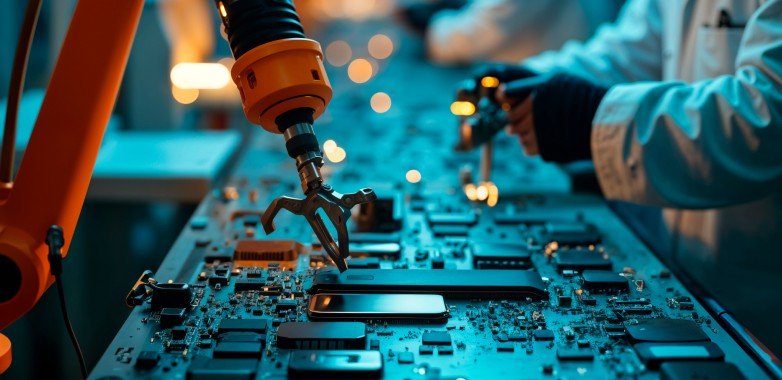
The manufacturing sector is undergoing a fundamental shift. Traditional factories built on manual processes and isolated systems are being replaced by intelligent, connected, and data-driven operations. This evolution—commonly known as Industry 4.0—is powered largely by advanced software solutions that enable manufacturers to digitalize operations, improve efficiency, and stay competitive in an increasingly complex global market.
At the heart of Industry 4.0 lies software that connects machines, people, and processes into a unified digital ecosystem.
What Industry 4.0 Means for Manufacturing
Industry 4.0 represents the integration of digital technologies into manufacturing operations. It combines automation, data exchange, analytics, and connectivity to create smart factories that can monitor themselves, optimize performance, and adapt in real time.
While sensors and machines generate data, it is software that transforms this data into insights and actions. Without the right software solutions, digital transformation remains incomplete.
The Role of Software in Smart Manufacturing
Software acts as the central intelligence layer in Industry 4.0 environments. It connects production systems, enterprise platforms, and operational data, enabling manufacturers to gain visibility and control across the entire value chain.
Modern manufacturing software allows organizations to:
- Monitor operations in real time
- Analyze performance data
- Automate workflows and decisions
- Align production with business objectives
This shift from reactive to proactive manufacturing is a key outcome of digital transformation.
Manufacturing Execution Systems (MES)
MES software bridges the gap between the shop floor and enterprise systems. It tracks production in real time, monitors machine performance, and ensures quality compliance.
With MES solutions, manufacturers can:
- Improve production transparency
- Reduce errors and rework
- Ensure traceability and quality control
- Optimize scheduling and resource usage
MES plays a critical role in achieving consistency, efficiency, and accountability in Industry 4.0 environments.
Industrial Automation and Control Software
Automation software enables machines and production lines to operate with minimal human intervention. These systems manage workflows, coordinate machines, and adjust operations based on real-time conditions.
Advanced control software supports:
- Adaptive production processes
- Faster response to demand changes
- Reduced operational downtime
- Improved overall equipment effectiveness
By automating routine tasks, manufacturers can focus on innovation and strategic growth.
Data Analytics and Decision Intelligence
Industry 4.0 generates massive volumes of data from machines, sensors, and systems. Analytics software converts this data into meaningful insights that drive smarter decisions.
With data-driven software solutions, manufacturers can:
- Identify inefficiencies and bottlenecks
- Predict maintenance needs
- Optimize energy and material usage
- Improve demand forecasting and planning
Decision intelligence tools empower leadership teams with actionable insights instead of raw data.
Digital Twins and Simulation Software
Digital twin software creates virtual replicas of physical machines, production lines, or entire factories. These digital models allow manufacturers to simulate scenarios, test changes, and optimize processes without disrupting real operations.
Key benefits include:
- Reduced risk during process changes
- Faster product and process innovation
- Improved equipment design and layout planning
- Better performance optimization
Digital twins are becoming a cornerstone of Industry 4.0 strategies.
Cloud-Based Manufacturing Platforms
Cloud software solutions enable centralized data storage, remote monitoring, and scalable operations. Manufacturers can access production insights from anywhere while maintaining consistent system performance across multiple facilities.
Cloud-based platforms support:
- Seamless system integration
- Lower infrastructure costs
- Faster software updates
- Improved collaboration across teams and locations
This flexibility is essential for modern, distributed manufacturing operations.
Cybersecurity and Compliance Software
As factories become more connected, cybersecurity becomes a critical concern. Industry 4.0 software solutions include security frameworks that protect production systems, data, and intellectual property.
Security-focused software helps manufacturers:
- Prevent unauthorized access
- Monitor system vulnerabilities
- Ensure regulatory compliance
- Safeguard operational continuity
A secure digital foundation is essential for sustainable digital transformation.
Enabling Continuous Improvement and Scalability
One of the strongest advantages of Industry 4.0 software solutions is scalability. As production needs evolve, software platforms can be expanded with new modules, analytics tools, or integrations.
This allows manufacturers to:
- Adapt to market changes quickly
- Integrate new technologies easily
- Support long-term growth
- Maintain competitive advantage
Continuous improvement becomes embedded into daily operations rather than treated as a separate initiative.
Conclusion
Industry 4.0 is not just about automation—it is about intelligent transformation. Software solutions are the driving force behind this change, connecting systems, unlocking insights, and enabling smarter decision-making across manufacturing operations. From MES and analytics to digital twins and cloud platforms, software empowers manufacturers to operate more efficiently, securely, and sustainably.
Choose reliable Artificial Intelligence Services in India to transform data into actionable insights and measurable business growth.