Email marketing is so strong as a strong digital marketing channel since it enables businesses to employ a personal channel of communication directly to their audience, measurably and cost-effectively. Nevertheless, random emails will not bring success. It is a result of creating a properly organized email marketing channel that would lead subscribers through a series of steps, starting with their learning about your brand and turning into devoted clients and promoters.
You will know how to create an effective email marketing funnel in a basic, easy-going manner in this guide. It has simplified it, whether you are a beginner or someone who wants to polish their strategy, as the article is so simplified that anyone can read and apply it. Other tools, such as an email extraction tool, are also used by many marketers to gather the relevant contact information ethically and efficiently and they may serve as a useful starting point in funnel building when properly used.
What Is an Email Marketing Funnel?
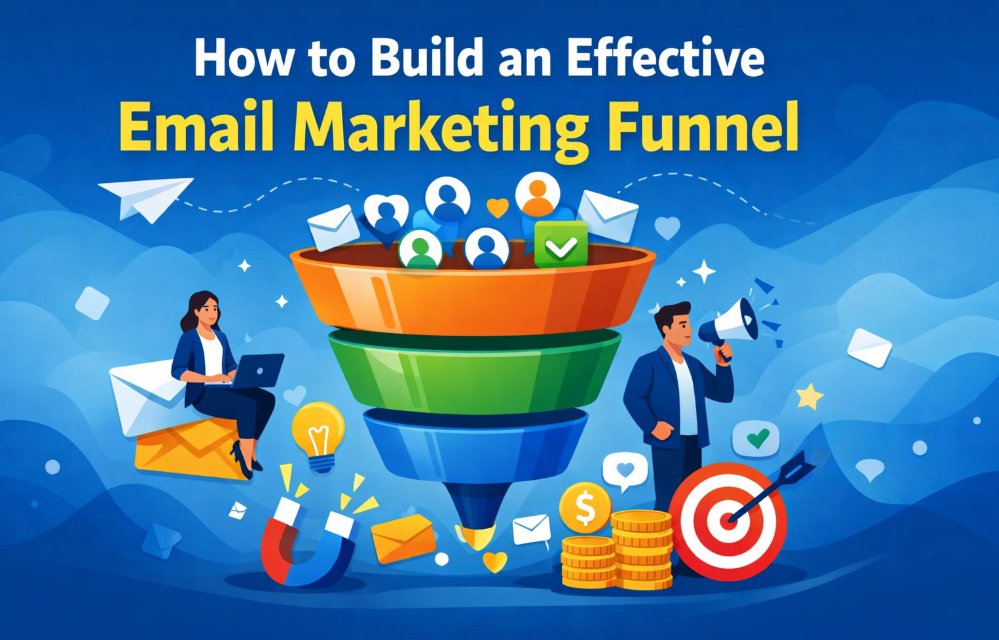
An email marketing funnel consists of a series of steps or a planned process through which your subscribers will pass once they are a part of your email list. The funnel would not send the same message to everybody, but rather deliver the right message at the right time, depending on the stage where the subscriber is in his or her progression.
The funnel usually has four main stages:
- Awareness – People discover your brand.
- Consideration – They learn more and evaluate your offer.
- Conversion – They take action, such as making a purchase.
- Retention & Loyalty – You build long-term relationships.
Each stage has a clear purpose and specific types of emails that move subscribers forward.
Why an Email Marketing Funnel Is Important
Before jumping into the “how,” it’s important to understand why an email funnel matters.
- Builds trust gradually instead of pushing sales immediately
- Improves open and click-through rates with targeted content
- Increases conversions by addressing real subscriber needs
- Saves time through automation
- Creates consistent communication with your audience
Without a funnel, email marketing often feels random and ineffective. With a funnel, every email has a role.
Step 1: Define Your Funnel Goal
Every effective funnel starts with a clear goal. Ask yourself:
- Do you want more sales?
- Are you trying to book calls or demos?
- Do you want to nurture leads for long-term value?
- Are you building authority and trust?
Your goal determines:
- The type of emails you send
- The frequency of emails
- The call-to-action (CTA) in each stage
For example, an eCommerce funnel focuses heavily on product education and offers, while a service-based funnel may focus more on trust and consultation bookings.
Step 2: Understand Your Target Audience
You cannot build an effective email funnel without understanding who you’re talking to.
Key questions to answer:
- What problems does your audience face?
- What solutions are they searching for?
- What objections stop them from buying?
- What language do they use?
Segmenting your audience based on interests, behavior, or demographics helps you send more relevant emails. Relevance is what turns subscribers into customers.
Step 3: Build and Optimize Your Email List
A high-quality list is more valuable than a large one. Focus on permission-based subscribers who actually want to hear from you.
Common List-Building Methods
- Website opt-in forms
- Lead magnets (ebooks, checklists, templates)
- Webinars or free courses
- Content upgrades
- Social media sign-ups
Your signup process should be simple, clear, and trustworthy. Avoid overwhelming users with too many form fields.
Step 4: Awareness Stage – Welcome and Educate
This is where new subscribers enter your funnel. Your main goal here is first impressions and trust-building, not selling.
Types of Emails in the Awareness Stage
- Welcome email
- Brand introduction
- Value-based educational content
- Helpful tips or insights
Your welcome email should:
- Thank them for subscribing
- Set expectations (what kind of emails they’ll receive)
- Introduce your brand voice
- Deliver the promised lead magnet
A strong start improves engagement for the rest of the funnel.
Step 5: Consideration Stage – Nurture and Build Authority
At this stage, subscribers are aware of your brand but are still deciding if they trust you. Your job is to educate, nurture, and position yourself as an authority.
Content Ideas for This Stage
- How-to guides
- Case studies
- Problem-solution emails
- Industry insights
- Comparisons and FAQs
This is also a good place to ensure your website experience supports your emails. For example, aligning email messaging with your WordPress Settings helps maintain consistency in branding, tone, and user experience across landing pages and email campaigns.
Step 6: Conversion Stage – Turn Subscribers into Customers
Now your subscribers are ready to take action. The key here is to present clear, compelling offers without sounding pushy.
Effective Conversion Emails Include:
- Product or service benefits
- Testimonials and social proof
- Limited-time offers
- Clear CTAs
- Risk reducers (free trials, guarantees)
Focus on how your solution solves their specific problem. Keep your message simple and benefit-driven.
Step 7: Retention Stage – Build Long-Term Relationships
Many marketers stop after the sale—but this is a big mistake. Retention emails help you:
- Increase customer lifetime value
- Encourage repeat purchases
- Build brand loyalty
Retention Email Ideas
- Onboarding emails
- Usage tips
- Product updates
- Exclusive offers
- Feedback and surveys
Happy customers are more likely to refer others and become brand advocates.
Step 8: Automate Your Email Marketing Funnel
Automation allows your funnel to work 24/7 without manual effort. Once set up, emails are sent automatically based on triggers like:
- New subscriber signup
- Link clicks
- Page visits
- Purchases
Automation ensures:
- Consistent communication
- Timely delivery
- Better personalization
It also reduces human error and saves time.
Step 9: Track Performance and Optimize
No funnel is perfect from day one. You need to monitor and improve it regularly.
Key Metrics to Track
- Open rate
- Click-through rate
- Conversion rate
- Unsubscribe rate
- Bounce rate
Use this data to:
- Improve subject lines
- Adjust email timing
- Refine messaging
- Segment your audience better
Small changes can lead to big improvements over time.
Email Marketing Funnel Stages Overview
Below is a simple table summarizing each stage of the email marketing funnel:
| Funnel Stage | Goal | Email Type | Key Focus |
| Awareness | Introduce brand | Welcome & educational emails | Trust & value |
| Consideration | Build authority | Guides, case studies | Education |
| Conversion | Drive action | Offers & promotions | Sales |
| Retention | Keep customers | Onboarding & updates | Loyalty |
Common Mistakes to Avoid
Even a good funnel can fail if these mistakes are made:
- Sending too many sales emails too soon
- Ignoring audience segmentation
- Using unclear CTAs
- Not cleaning your email list regularly
- Forgetting mobile optimization
A clean, engaged list always performs better than a large inactive one.
Final Thoughts
The secret to creating an effective email marketing funnel is to send more quality emails, not an increased number of emails, but improved and relevant emails at the right time. Once you prioritize your audience, create value at each level, and use automation smartly, then your funnel becomes an effective engine of growth in your business.
Mass Delete Emails is one of the practices that can be utilized as part of the continuous management of the email list to keep the list hygienic and further performance of the overall campaign, as well as make the funnel as efficient and results-driven as possible.
When you do all this, you will be well on track with building an email marketing funnel that is not only easy to use but also effective and easy to understand and execute by anyone.