
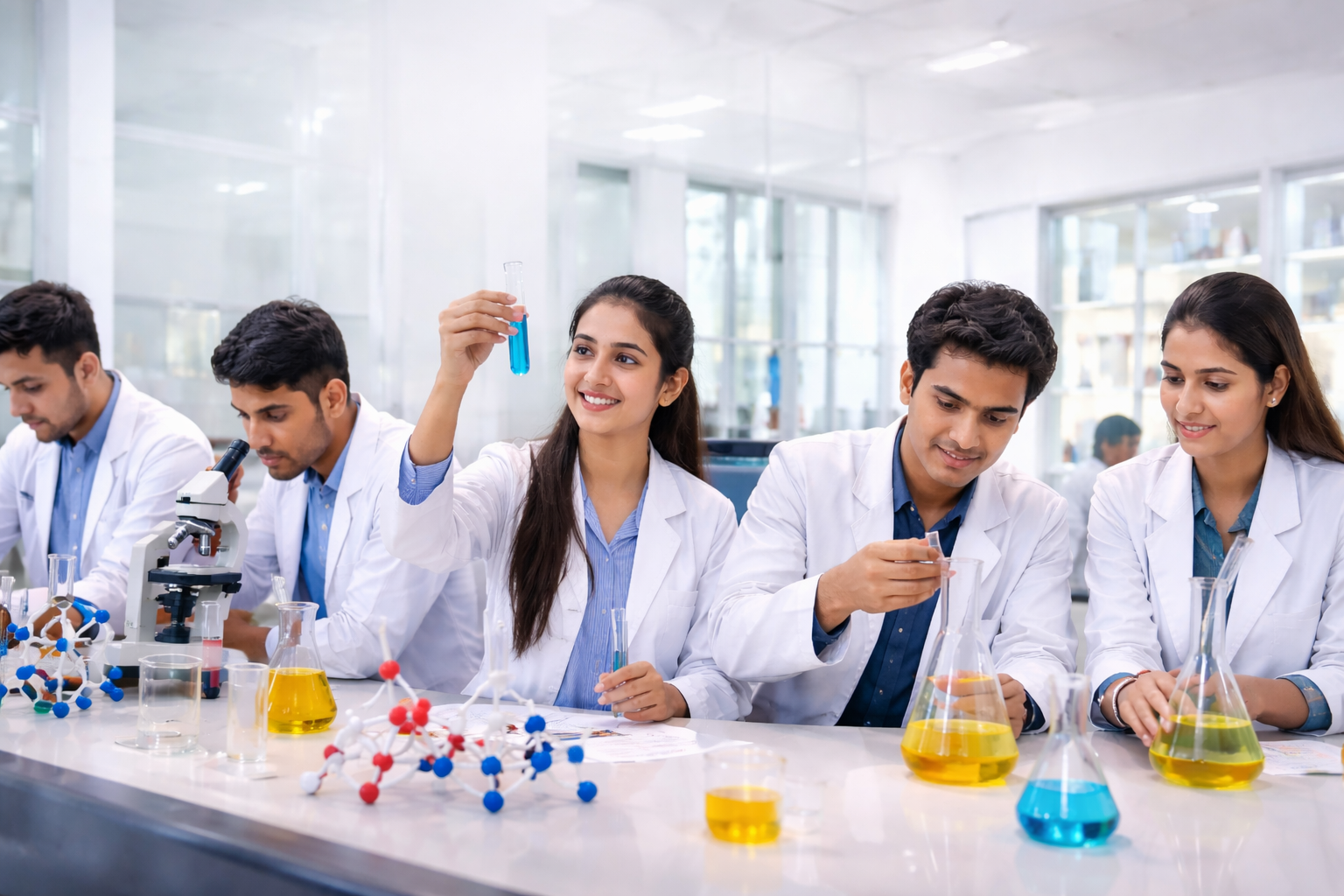
Clinical exposure is the backbone of the Pharm D program. Unlike traditional pharmacy courses, Pharm D is designed to train students directly within real healthcare environments, making them active contributors to patient care. Among the Pharm D colleges in Uttar Pradesh, Dr. M.C. Saxena Group of Colleges (MCSGOC) stands out for its strong focus on hands-on clinical learning and hospital-based training.
Why Clinical Exposure Is Crucial in Pharm D Education
Pharm D students are expected to bridge the gap between doctors and patients. This requires more than theoretical knowledge—it demands real-time experience in hospitals, interaction with medical teams, and understanding patient behavior. Clinical exposure helps students:
- Understand real disease conditions
- Interpret prescriptions accurately
- Monitor drug therapy outcomes
- Improve patient counseling skills
- Gain confidence in hospital settings
This practical orientation is what differentiates Pharm D from other pharmacy courses.
Role of Clinical Training in Pharm D Colleges in Uttar Pradesh
The growing demand for clinical pharmacists in India has increased the importance of experiential learning. Reputed Pharm D colleges in Uttar Pradesh, such as MCSGOC, align their curriculum with hospital-based training models to meet industry and healthcare standards.
At MCSGOC, clinical exposure is not treated as an add-on—it is integrated into the academic journey from the early years of the program.
Hospital-Based Learning at MCSGOC
One of the key strengths of Dr. M.C. Saxena Group of Colleges is its structured approach to hospital training. Students are regularly exposed to real clinical environments where they observe and participate in patient care activities under expert supervision.
Key aspects of hospital exposure include:
- Ward rounds with healthcare professionals
- Understanding patient case histories
- Learning drug usage in different medical conditions
- Exposure to emergency and critical care scenarios
This helps students develop a strong clinical mindset early in their careers.
Clinical Rotations Across Medical Specialties
MCSGOC ensures that Pharm D students gain exposure across multiple medical departments. These rotations help students understand how pharmacotherapy differs across specialties.
Common areas of clinical exposure include:
- General Medicine
- Pediatrics
- Cardiology
- Orthopedics
- Surgery
- Intensive Care Units (ICU)
Such diversified exposure prepares students for a wide range of professional roles after graduation.
Patient Interaction and Counseling Experience
A major highlight of clinical training at MCSGOC is direct patient interaction. Students learn how to communicate complex medication information in a simple and compassionate manner.
This includes:
- Explaining dosage and side effects
- Educating patients about drug adherence
- Addressing patient concerns and queries
- Supporting long-term therapy management
These experiences shape students into patient-centric healthcare professionals.
Case Study Discussions and Clinical Documentation
At Dr. M.C. Saxena Group of Colleges, clinical exposure goes beyond observation. Students are actively involved in:
- Preparing patient case studies
- Analyzing drug therapy plans
- Documenting clinical findings
- Presenting cases during academic reviews
Such activities sharpen analytical skills and help students apply classroom knowledge to real medical situations.
Internship and Advanced Clinical Training
The internship phase is one of the most critical parts of the Pharm D program. MCSGOC provides structured internship opportunities where students spend extended time in hospital environments.
During internships, students gain experience in:
- Therapeutic drug monitoring
- Adverse drug reaction reporting
- Clinical research support
- Working alongside doctors and nurses
This professional exposure gives students a clear understanding of real-world healthcare operations.
How MCSGOC Prepares Students for Clinical Careers
Among Pharm D colleges in Uttar Pradesh, MCSGOC focuses on holistic development by combining academics, clinical practice, and professional ethics.
Students graduating from MCSGOC are well-prepared for roles such as:
- Clinical Pharmacist
- Hospital Pharmacist
- Pharmacovigilance Associate
- Medical Writing Professional
- Clinical Research Coordinator
The strong clinical foundation ensures better employability and career growth.
Faculty Support and Mentorship
Clinical exposure is effective only when guided by experienced mentors. At MCSGOC, faculty members with strong academic and practical backgrounds mentor students throughout their clinical journey.
Faculty support includes:
- Regular clinical assessments
- One-on-one guidance during training
- Feedback on patient interaction skills
- Career counseling and professional guidance
This structured mentorship enhances learning outcomes significantly.
Future Scope of Clinical Pharmacy in Uttar Pradesh
With the expansion of hospitals, healthcare infrastructure, and patient-focused treatment models, the demand for clinically trained pharmacists is rising rapidly. Pharm D colleges in Uttar Pradesh, especially institutions like Dr. M.C. Saxena Group of Colleges, are playing a vital role in shaping the future of clinical pharmacy education.
Students trained with strong clinical exposure are well-positioned to contribute meaningfully to India’s evolving healthcare ecosystem.
Read : blogchowk
Conclusion
Clinical exposure is the defining strength of the Pharm D program, and choosing the right institution makes all the difference. Among the leading Pharm D colleges in Uttar Pradesh, Dr. M.C. Saxena Group of Colleges (MCSGOC) offers a well-structured, hospital-integrated learning environment that prepares students for real-world clinical responsibilities.