
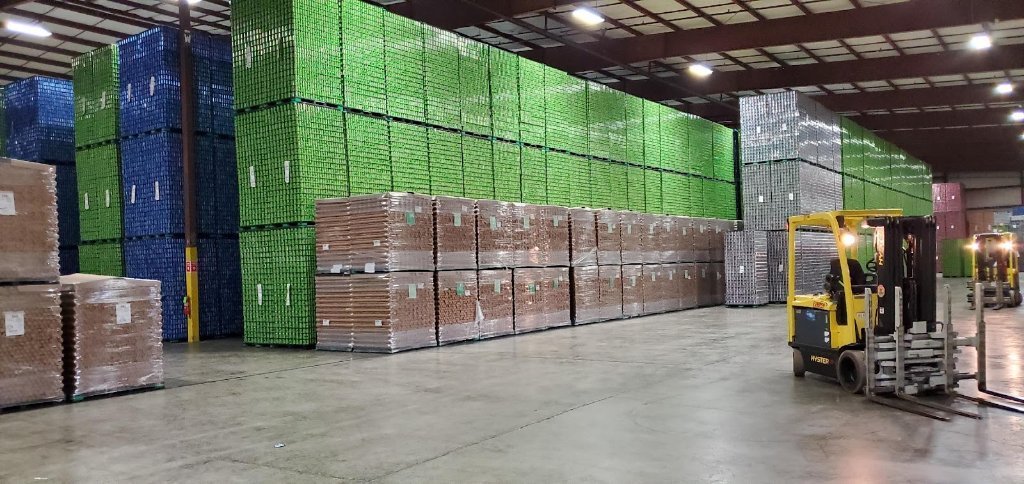
The beverage industry—spanning craft breweries, specialty sodas, premium spirits, and health‑focused functional drinks—faces a unique logistical puzzle. Products are often temperature‑sensitive, require precise inventory rotation, and must move quickly from production line to retail shelf or directly to the consumer. To stay competitive, many brands turn to third‑party logistics (3PL) providers that specialize in beverage warehousing, shipping, and distribution. A “best‑in‑class” beverage 3PL not only offers the physical space to store pallets of cans, bottles, and kegs but also supplies an ecosystem of technology, compliance expertise, and value‑added services that turn a supply chain from a cost center into a strategic advantage. Below, we outline the critical capabilities to look for, highlight a handful of industry leaders, and explain how the right partner can accelerate growth while protecting product integrity.
1. Core Capabilities Every Beverage 3PL Must Have
| Capability | Why It Matters for Beverages | Typical Service Features |
|---|---|---|
| Temperature‑Controlled Warehousing | Beer, wine, and many non‑alcoholic drinks degrade quickly outside their optimal range (35‑55 °F for most ales, 45‑65 °F for many sodas). | Multi‑zone cold rooms, real‑time temperature monitoring, backup power, and SOPs for rapid temperature recovery after door openings. |
| FIFO & Lot Tracking | Shelf‑life and regulatory labeling (e.g., “best‑by” dates, batch numbers) require strict first‑in‑first‑out rotation. | Barcoding or RFID at receipt, automated lot assignment, and reporting dashboards that flag expired or near‑expiry inventory. |
| Mix‑and‑Match Order Picking | Retailers often request mixed SKUs (e.g., six‑packs of two flavors, a case of craft beer, and a crate of sparkling water) in the same pallet. | Pick‑to‑light, zone picking, and cross‑docking capabilities that minimize handling while preserving product quality. |
| Regulatory Compliance | Alcoholic beverages are subject to state‑by‑state tax, licensing, and reporting requirements. | Integrated tax‑calculation engines, documentation generation (e.g., excise tax forms), and audit‑ready records. |
| Scalable Transportation Network | Seasonal spikes—holiday beverage sales, summer beer festivals, or limited‑edition launches—demand flexible shipping capacity. | Partnerships with temperature‑controlled LTL carriers, dedicated trailer fleets, and a digital TMS that provides real‑time freight quotes and carrier performance metrics. |
| Value‑Added Services (VAS) | Private‑label bottling, kegerator fill‑and‑seal, repackaging for e‑commerce, and kegs de‑pressurization add revenue streams for brands. | On‑site labeling, case artwork, shrink‑wrapping, kegs cleaning, and reverse‑logistics for returns or expired stock. |
When evaluating providers, ask for a process walkthrough that demonstrates how each of these capabilities is executed in real time. A best‑in‑class 3PL will be able to point to SOPs, data logs, and case studies that prove reliability, not just a list of services.
2. Market Leaders – Who’s Setting the Benchmark?
| Provider | Signature Strength | Notable Clients / Industries |
|---|---|---|
| Lineage Logistics – Beverage & Alcohol | One of the largest temperature‑controlled networks in North America with 28+ dedicated cold‑storage sites. Their “Beverage Hub” platform integrates demand forecasting with automated slotting, reducing pick times by up to 30 %. | Major craft breweries (e.g., Sierra Nevada), national soft‑drink distributors, and premium spirits houses. |
| Ryder Supply Chain Solutions – Beverage Division | Extensive truckload fleet equipped with insulated trailers and a proprietary TMS that optimizes route planning for multi‑temperature loads. Ryder also offers “Ryder Refresh,” a rapid kegerator‑to‑retail service. | Large‑scale soda manufacturers, frozen‑drink brands, and regional wine importers. |
| C.H. Robinson – Beverage Logistics | Deep expertise in global trade compliance for alcohol, plus a robust e‑commerce fulfillment network that supports DTC (direct‑to‑consumer) subscription boxes. Their “Beverage Visibility Platform” provides end‑to‑end tracking from brewery to consumer doorstep. | Subscription cocktail kits, health‑drink startups, and international wine importers. |
| XPO Logistics – Specialty Beverage | Strong presence in the Midwest and West Coast with high‑riser cold‑storage facilities. XPO’s “SmartWarehouse” uses AI‑driven slotting and predictive maintenance to keep refrigeration units running at peak efficiency. | Craft breweries expanding into West Coast markets, specialty tea and kombucha brands. |
| Stord – Cloud‑First Beverage 3PL | A newer entrant that leans heavily on API‑first integration, allowing brands to sync inventory data directly from ERP or Shopify. Stord’s “Dynamic Warehouse Allocation” automatically re‑balances stock across a network of micro‑fulfillment centers during peak demand. | E‑commerce‑driven beverage brands, limited‑edition seasonal releases, and direct‑to‑consumer wine clubs. |
These providers illustrate different strategic angles—scale, technology, compliance, or flexibility. The “best” choice depends on a brand’s current footprint, growth aspirations, and the complexity of its product portfolio.
3. How the Right 3PL Transforms the Bottom Line
- Reduced Shrinkage & Waste – With continuous temperature monitoring and automated alerts, spoilage rates can drop from the industry average of 5‑7 % to under 2 %, translating directly into cost savings.
- Faster Order‑to‑Delivery Cycles – Advanced slotting and pick‑to‑light systems cut labor‑time per order by 20‑30 %, enabling same‑day or next‑day service for high‑margin DTC customers.
- Improved Cash Flow – Real‑time visibility into inventory levels supports Just‑In‑Time (JIT) replenishment, decreasing the need for large safety stocks and freeing up working capital.
- Regulatory Peace of Mind – Automated excise‑tax reporting and digital traceability help brands avoid costly fines and audit penalties, especially when operating across multiple states.
- Scalable Growth – During a new product launch, a flexible 3PL can instantly provision extra cold‑room space and additional carrier capacity, preventing bottlenecks that would otherwise require costly capital investment.
4. Red Flags to Watch Out For
- Limited Temperature Zones – A single “cold” area that runs at a blanket temperature may be insufficient for brands that need distinct ranges (e.g., lager vs. non‑alcoholic sparkling water).
- Lack of Integrated Tech – Manual spreadsheets or siloed WMS systems increase the risk of data entry errors and hinder real‑time decision making.
- Inadequate Compliance Documentation – If the provider cannot produce up‑to‑date permits for each state or cannot generate electronic excise‑tax reports, you may face legal exposure.
- No Reverse‑Logistics Program – Beverage returns, damaged kegs, or expired batches require a structured process; absence of this service often leads to inventory loss.
5. Getting Started – A Step‑by‑Step Evaluation Framework
- Define Business Requirements – Map out product SKUs, temperature tolerances, peak seasonality, and regulatory jurisdictions.
- Shortlist Providers – Use the capabilities table above to filter for those that meet at least 80 % of your must‑have criteria.
- Request a Pilot – Ask the 3PL to run a limited‑scope pilot (e.g., a single SKU in one warehouse) and provide KPI reports on temperature variance, pick accuracy, and shipping lead time.
- Assess Technology Fit – Verify API compatibility with your ERP, e‑commerce platform, and accounting system. Request a demo of their dashboard and mobile app.
- Negotiate Service Level Agreements (SLAs) – Include measurable targets for temperature compliance (e.g., ≤ 0.5 °F deviation 99 % of the time), order accuracy (> 99.5 %), and on‑time delivery (> 98 %).
- Plan Transition – Develop a phased migration plan that includes staff training, inventory reconciliation, and a contingency buffer of safety stock.
6. The Future of Beverage 3PL
The next wave of innovation will likely blend IoT‑enabled pallets, blockchain traceability, and AI‑driven demand forecasting. Imagine a smart crate that transmits its exact temperature history to the retailer’s app, or a blockchain ledger that instantly validates that a bottle of premium whiskey has passed every compliance checkpoint from distillery to bar. Brands that partner with forward‑thinking 3PLs now will be positioned to tap these technologies without massive internal development costs.
Bottom line: Selecting the best beverage 3PL is less about finding the cheapest warehouse and more about securing a partner that can protect product quality, guarantee regulatory compliance, and unlock operational efficiencies at scale. By focusing on temperature‑controlled infrastructure, sophisticated inventory visibility, and a robust transportation network—while keeping an eye on emerging tech—beverage brands can accelerate market reach, reduce waste, and ultimately deliver a better sip to the consumer.