
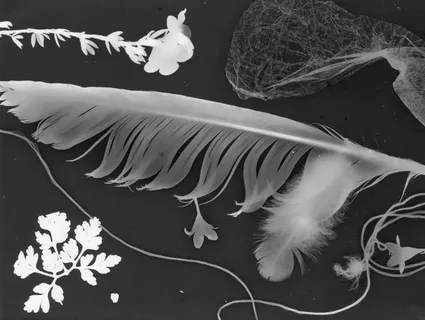
Photogram Photography offers a unique way to create images without using a camera. Instead of capturing a scene through a lens, this technique uses light-sensitive paper and physical objects to produce artistic silhouettes and abstract forms. As a result, it stands out as one of the most creative methods in visual art.
Explains how Photogram Photography works, why it is important, and how it connects with other styles such as Black and White Photography, Reflex Photography, and darkroom photography. Moreover, it explores how techniques like freeze frame photography and subjects like black and white feather photography and flowers black and white photography prints can inspire photogram designs.
Understanding this art form helps photographers and artists think differently about light and composition. Therefore, this guide provides clear explanations, practical insights, and creative ideas for beginners and professionals alike.
1. Why Photogram Photography Is a Powerful Creative Tool
Photogram Photography is powerful because it simplifies the image-making process. Without a camera, the focus shifts entirely to light, shadow, and form. This allows artists to experiment freely and produce unique results.
Moreover, this technique encourages creativity by removing technical barriers. Instead of adjusting camera settings, the artist works directly with objects and light sources.
Understanding the Basics of Light and Object Placement
In Photogram Photography, objects are placed on light-sensitive paper and exposed to light. The areas blocked by the objects remain light, while the exposed areas turn dark. This creates a high-contrast image that highlights shape and structure.
This process is closely linked to darkroom photography, where images are developed manually. The darkroom environment allows careful control over exposure time and intensity, leading to more refined results.
Additionally, Photogram Photography often aligns with Black and White Photography because both styles emphasize contrast and simplicity. Without color, the viewer focuses more on the form and texture of the objects.
Real-Life Applications and Artistic Examples
Photogram Photography is used in fine art, education, and creative experimentation. For example, artists may use natural objects like leaves or feathers to create detailed compositions. In this case, black and white feather photography inspires photograms that highlight delicate patterns.
Similarly, floral subjects are widely used. Designs inspired by flowers black and white photography prints can be recreated through photograms, producing elegant and decorative artwork suitable for homes or galleries.
In professional work such as Peter Dreyer Photography, experimental approaches often combine traditional and modern ideas. This shows how Photogram Photography can fit into a broader artistic practice.
2. Combining Photogram Photography with Modern Techniques
After learning the basics, artists can expand their creativity by combining Photogram Photography with other techniques. This approach leads to more complex and visually engaging results.
Additionally, blending styles helps create a unique artistic identity.
Why These Combinations Matter
Combining Photogram Photography with Reflex Photography introduces new possibilities. For instance, reflective surfaces can be used alongside objects to create layered and abstract effects.
Moreover, integrating ideas from freeze frame photography allows artists to experiment with motion. While traditional photograms are static, moving objects during exposure can produce blurred or dynamic patterns.
These combinations matter because they push the boundaries of what Photogram Photography can achieve. They also encourage artists to explore new creative directions.
Supporting Insights and Practical Value
Visual studies show that high-contrast images are easier for viewers to understand and remember. Therefore, Photogram Photography, with its bold shapes and tones, is effective in communication and design.
Additionally, many art educators use photograms to teach the basics of light and composition. This method simplifies complex ideas and makes them easier to learn.
Professional artists often combine darkroom photography techniques with digital editing to refine their work. This blend of traditional and modern methods increases both quality and creative control.
3. Mastering Photogram Photography for Artistic Growth
Mastering Photogram Photography requires patience, experimentation, and a strong understanding of light. It is not only about placing objects on paper but also about exploring how light interacts with different materials.
Furthermore, consistent practice helps develop a personal style.
Practical Applications and Real-World Insights
In practical terms, beginners can start with simple objects such as leaves, paper shapes, or everyday items. Over time, they can experiment with transparent or textured materials to create more complex images.
Using ideas from Black and White Photography, artists can focus on contrast and composition. Meanwhile, inspiration from freeze frame photography can lead to creative motion effects during exposure.
Additionally, observing patterns in nature such as feathers or flowers can guide the creation of detailed photograms. These practices help improve both creativity and technical skill.
By combining traditional techniques with modern ideas, Photogram Photography becomes a powerful tool for artistic expression.
FAQs
What is Photogram Photography in simple terms?
Photogram Photography is a method of creating images without a camera by placing objects on light-sensitive paper and exposing them to light.
How is darkroom photography related to photograms?
Darkroom photography provides the environment where photograms are developed, allowing control over light exposure and final results.
Can beginners try Photogram Photography easily?
Yes, beginners can start with simple objects and basic light sources to create creative and unique images.
What subjects work best for Photogram Photography?
Objects with interesting shapes or textures, such as feathers and flowers, work very well for photograms.
Conclusion
Photogram Photography is a unique and creative art form that removes the need for a camera while focusing on light, shape, and texture. Moreover, it connects strongly with styles like Black and White Photography, Reflex Photography, and darkroom photography, offering endless possibilities for experimentation.
By practicing regularly and exploring different techniques, artists can develop their skills and create meaningful work. Therefore, learning Photogram Photography is an excellent step toward mastering visual creativity and artistic expression.