
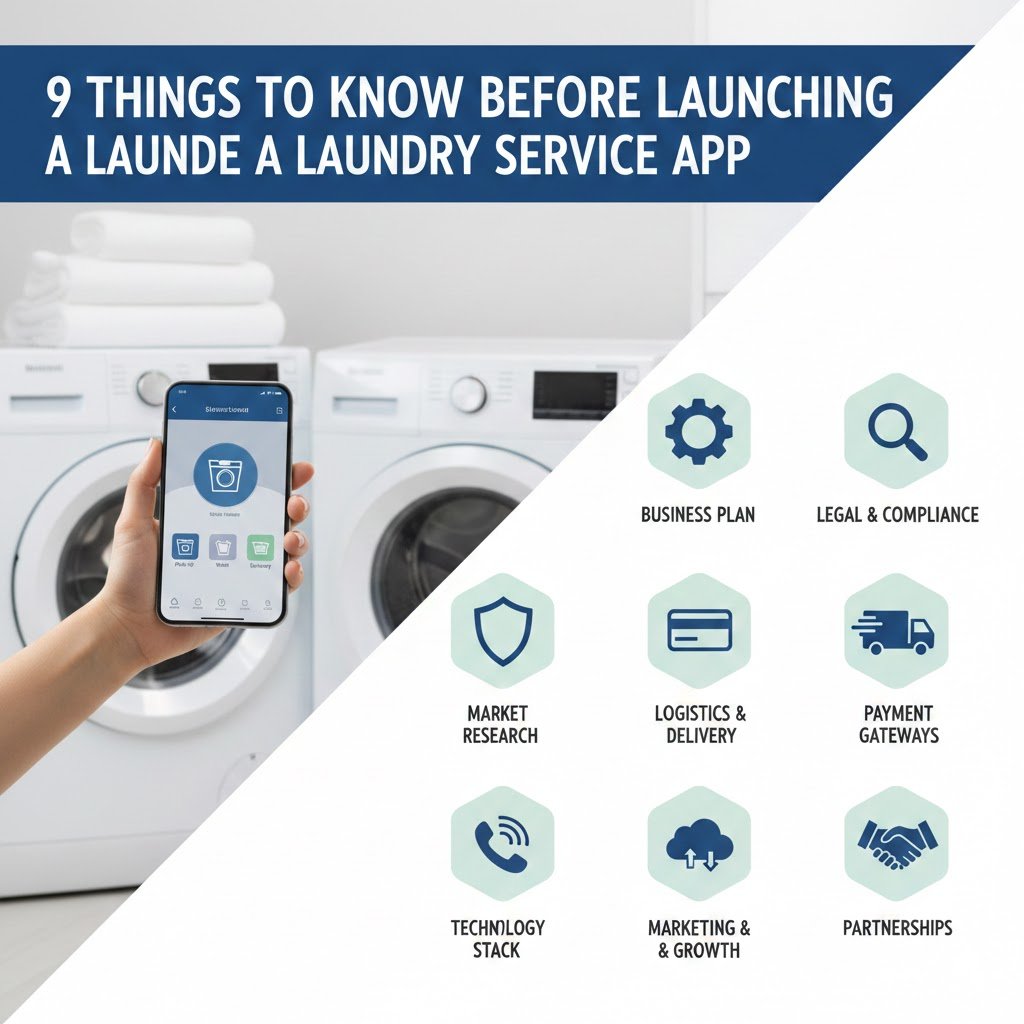
Demand for on-demand services is rapidly increasing as consumers seek convenience, speed, and seamless digital access. Laundry services are shifting from offline stores to app-based pickup and delivery models. Successful laundry app development requires integrating technology, logistics, operations, and strategy to build a scalable, sustainable business platform.
If you plan to enter this space, here are nine key factors to know before launching your platform.
1. Your Business Model Defines Everything
Before development begins, you must decide how your platform will operate. This decision affects your cost structure, revenue streams, and even technical architecture.
There are generally three workable models in this industry:
- Aggregator model – You link customers to laundries. They are third-party. You earn a commission for each order.
- Single-vendor model – You run your own laundry facility. Use the app for bookings and management.
- Marketplace model – Many vendors offer services. Users pick based on price, ratings, or location.
Each model has a different operational complexity. Aggregator platforms need solid vendor onboarding and commission tracking. Single-vendor setups must have tight logistics and strict quality control.
Choosing the right structure early prevents costly changes later.
2. Market Research Is Not Optional
Many founders think there’s demand because similar platforms exist in other cities. That assumption can be dangerous.
You must validate:
- Who exactly needs your service?
- What price sensitivity exists in your area?
- Are customers currently using offline laundries?
- What pain points are unresolved?
For instance, working professionals may rank express delivery. Students may focus on affordability. Families may prefer subscription plans. Knowing these behavior patterns helps you position your app well. This way, you avoid competing on price.
Data-driven decisions greatly reduce risk.
3. Start With an MVP, Not a Feature-Heavy Product
One of the biggest mistakes startups make is trying to build everything at once when planning their platform. A feature-heavy product may look impressive, but it delays launch and inflates costs. Working with a leading laundry app development company helps prioritize MVP features and control budgets effectively.
Instead, begin with a Least Viable Product that includes essential functionality:
Customer Side
- Simple registration
- Service selection
- Pickup scheduling
- Real-time order tracking
- Secure digital payments
Admin Dashboard
- Order management
- Pricing control
- Basic analytics
You can expand features later based on real user behavior. Early validation matters more than perfection.
4. Logistics Will Decide Your Reputation
In a laundry service app, technology supports operations—it does not replace them.
Your logistics framework must answer key questions:
- How fast can we arrange pickup?
- What is the turnaround time for washing and delivery?
- How do we handle damaged or lost items?
- Can we manage peak-hour demand with high efficiency?
If your logistics fail, customer reviews will decline significantly. Even a well-designed app cannot survive operational inconsistency.
Investing in delivery routing systems is important. So is the training staff. Efficient scheduling software is also key. These steps help keep customers for the long term.
5. Pricing Strategy Must Balance Growth and Profitability
Heavy discounts may generate downloads, but they rarely build sustainable businesses. Many early-stage platforms collapse because they underestimate operational expenses.
Consider structuring your pricing with careful thought:
- Per-kilogram rates for regular wash
- Per garment pricing for premium services
- Express delivery surcharge
- Subscription-based weekly or monthly plans
Run detailed cost calculations, including labor, fuel, packaging, platform maintenance, and marketing. Only then complete your rates.
A strategic pricing model should attract users without destroying margins.
6. Scalability Should Be Planned From Day One
Even if you start in one city, your tech setup should be ready to grow.
Scalable architecture includes:
- Cloud-based hosting
- Modular backend systems
- Multi-location support
- API integrations for future upgrades
Expanding to many cities can create chaos in operations and reporting. This happens if your backend isn’t well-structured.
Working with a top laundry app development company aims for long-term growth. It’s about lasting success, not quick fixes.
7. Compliance and Legal Structure Matter More Than You Think
Digital convenience does not cut regulatory responsibilities.
Depending on your region, you may need:
- Business registration
- Tax compliance (GST or VAT)
- Employee contracts
- Environmental approvals (water disposal regulations)
Failing to comply can result in penalties or forced shutdowns. Operational transparency builds trust not only with authorities but also with customers.
Ensure all documentation is complete before full-scale launch.
8. Marketing Must Start Before the Launch
A common misconception is that development completion equals business readiness. In reality, marketing should begin months earlier.
Pre-launch strategies may include:
- Local influencer promotions
- Early signup discounts
- Referral campaigns
- Social media awareness
After launch, focus on:
- Paid search campaigns
- Local SEO visibility
- App Store Optimization
- Retention campaigns through push notifications
User acquisition costs are rising globally. Retention strategies—loyalty programs, subscriptions, personalized offers—determine long-term profitability.
9. User Experience Is the Ultimate Growth Engine
On-demand platforms compete by offering a high level of convenience. If booking a service takes too many steps, users will uninstall the app.
Your interface must ensure:
- Fast loading speed
- Transparent pricing
- Clear delivery timelines
- Easy complaint resolution
A smooth user journey builds trust. Trust builds repeat orders. Repeat orders build revenue stability.
Investing in UX design is not an aesthetic decision — it is a business strategy.
Cost Considerations Before Launch
The total cost of launching depends on complexity, feature depth, and region. Generally, expenses fall into these categories:
- Development cost (MVP vs. full-featured)
- Hosting and maintenance
- Marketing budget
- Logistics setup
- Staff and operational expenses
Cutting development costs too much can lead to technical debt. Fixing that debt later can be costly. Think long-term rather than short-term.
Technology Stack and Performance
A modern, scalable platform often utilizes:
- Cross-platform frameworks for Android and iOS
- Secure backend architecture
- Cloud hosting solutions
- Integrated payment gateways
Performance optimization is key. Slow apps lower user engagement and retention rates.
Common Mistakes That Destroy Early Laundry Apps
Even promising platforms fail due to avoidable errors:
- Launching without demand validation
- Underestimating logistics complexity
- Ignoring customer feedback
- Overcomplicating the app interface
- Focusing only on discounts instead of value
Learning from industry failures helps you avoid repeating them.
Read the full breakdown of 11 strategic benefits :- 11 Benefits of Launching a Digital-First Laundry Service Platform
Final Thoughts
Launching a laundry service app isn’t a tech project. It’s a whole business ecosystem. It includes operations, marketing, compliance, and understanding customer psychology.
Success depends on:
- Clear business model selection
- Data-driven pricing
- Efficient logistics
- Scalable technology
- Strong retention strategies
When planned well, this industry has great long-term growth potential. This is especially true in cities. There, the need for convenient services is rising.