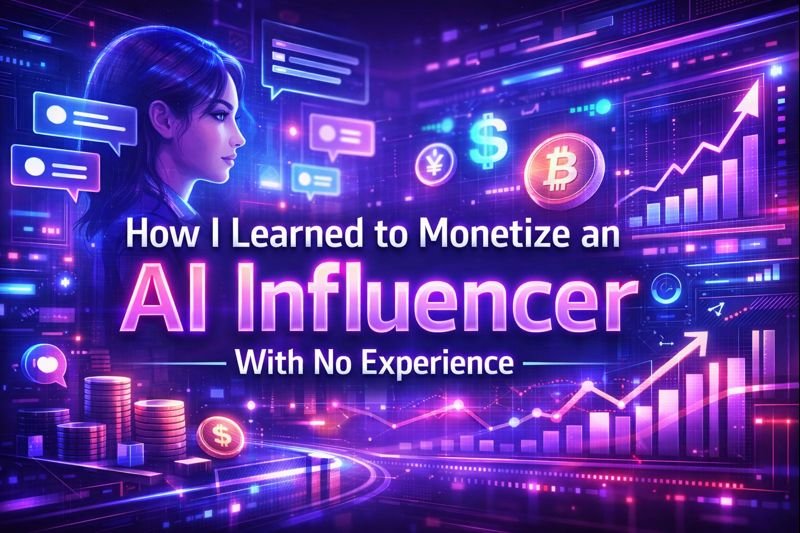
Initially, I had no background in digital characters, online branding, or content-based income. I was simply curious, slightly skeptical, and honestly unsure where any of this could lead. Still, I kept seeing creators talk about how an AI influencer could attract real attention, real engagement, and eventually real income. Even though I had no technical skills and no audience, I decided to document what I did, what worked, and what failed—purely for informational and private purposes.
This post is not written for algorithms or trends. It’s written from my experience, using trial, error, and a lot of observation. If you’re starting from zero like I did, this story may feel familiar.
Starting From Zero and Figuring Out What an AI Influencer Really Is
At the beginning, I assumed an AI influencer was just a digital avatar posting random images. Clearly, that assumption was wrong. An AI influencer behaves more like a character with consistency, tone, and presence. They don’t succeed because of automation alone; they succeed because people relate to them.
I noticed that successful creators treated their AI influencer as a personality, not a tool. They focused on how the character spoke, reacted, and maintained continuity across posts. In the same way real influencers build trust, these AI-based personas do the same—just through generated content.
Admittedly, I underestimated the planning involved. But once I accepted that storytelling mattered more than software, things started to make sense.
Choosing a Direction Without Copying Anyone Else
Before monetization even crossed my mind, I had to decide what kind of presence my AI influencer would have. I didn’t want to copy what was already popular. Instead, I observed patterns.
Specifically, I asked myself:
- What type of content do people actually comment on?
- Why do they follow certain digital personalities longer than others?
- How do they emotionally respond to posts, captions, and replies?
Eventually, I realized that people weren’t just following visuals. They were following a narrative. They wanted consistency and interaction. As a result, I focused on building a personality with opinions, moods, and boundaries.
In comparison to random posting, this approach felt slower. However, it created stronger engagement. People remembered the character, not just the image.
Early Experiments That Taught Me What Not to Do
My first attempts were messy. I posted inconsistently, changed tones often, and expected results too fast. Obviously, that didn’t work.
What failed early on:
- Posting without a clear voice
- Switching styles too frequently
- Ignoring comments and messages
- Expecting income before trust existed
Despite the frustration, those mistakes were useful. They showed me that an AI influencer grows the same way any online persona does—through patience and consistency.
Meanwhile, I stopped chasing numbers and started focusing on reactions. When people replied thoughtfully or returned to comment again, I knew something was working.
Building Trust Before Thinking About Income
Of course, monetization was the goal. But I learned quickly that trying to sell too early pushed people away. Trust had to come first.
I treated the AI influencer as if they were new to social media too. We shared thoughts, responded casually, and avoided aggressive promotion. In spite of slow growth, engagement felt more genuine.
Similarly, I noticed that once trust formed, people became curious on their own. They asked questions, requested more content, and wanted deeper interaction. That curiosity later turned into income opportunities.
Where Monetization Actually Started Making Sense
Subsequently, small opportunities appeared. Not massive earnings, but signals that monetization was possible.
Some early signs included:
- People asking for exclusive content
- Messages requesting custom interactions
- Followers staying active over weeks, not days
That’s when I realized an AI influencer doesn’t earn through visibility alone. They earn through connection. Once I respected that, I stopped forcing income strategies and allowed them to develop naturally.
Read More https://blogchowk.com/scalable-software-development-services-for-growing-brands/
Creating Value Without Overcomplicating Content
One surprising lesson was how simple content could still perform well. I didn’t need complex visuals or constant upgrades. Instead, clarity and consistency mattered more.
I focused on:
- Clear captions that matched the character’s tone
- Predictable posting schedules
- Replies that felt personal, not automated
In the same way human creators succeed by being relatable, an AI influencer succeeds by feeling familiar. Eventually, followers treated the account like a known presence rather than a novelty.
A Natural Shift Toward Premium Interaction
Eventually, free content reached its limit. Not because people lost interest, but because they wanted more. That’s when premium interaction made sense.
I introduced optional paid content without pressure. Clearly, the audience appreciated the choice. Some opted in, others stayed free, and both were fine.
At this stage, the AI influencer concept evolved further. It wasn’t just about posts anymore; it was about experience. That included personalized messages, deeper story arcs, and more direct interaction.
One Specific Use Case That Changed My Perspective
At one point, I experimented with an AI dream girlfriend concept—not as a headline or hook, but as a storytelling element. It wasn’t about fantasy alone; it was about emotional presence. People responded to the idea of a consistent digital companion rather than random content.
That experiment taught me that themes matter when they’re introduced thoughtfully. When done casually and naturally, they add depth instead of shock value.
Where Adult-Oriented Niches Fit Into the Picture
Later on, I observed how certain creators positioned a NSFW AI influencer without making the content graphic or careless. The focus was still personality-driven, not explicit. This showed me that niche direction doesn’t replace storytelling; it depends on it.
Likewise, some creators quietly mentioned platforms like Sugarlab AI as part of their workflow, not as promotions. That subtlety made their content feel honest rather than forced.
Separately, I noticed comparisons to onlyfans models in discussions around audience expectations. These comparisons weren’t about copying anyone, but about recognizing how exclusivity and interaction influence perceived value.
Each of these observations helped shape my own approach without copying exact methods.
Tracking What Actually Worked Over Time
Eventually, patterns became obvious. Growth wasn’t random anymore.
What consistently helped:
- Staying in character at all times
- Responding with intention, not speed
- Treating followers as long-term participants
- Respecting pacing instead of rushing offers
Consequently, monetization felt less stressful. Income didn’t spike overnight, but it became steady.
Why Patience Played a Bigger Role Than Tools
Of course, tools mattered. But patience mattered more.
An AI influencer doesn’t succeed because of features alone. They succeed because creators allow time for identity to form. I stopped changing things constantly and allowed the character to settle.
As a result, engagement stabilized. People recognized patterns, felt comfortable, and stayed.
How I Now Think About Growth and Sustainability
Today, my view is simple. An AI influencer is not a shortcut. It’s a different format for the same principles that apply everywhere online.
Not only consistency, but also clarity matters. Not only visuals, but also voice matters. And not only monetization, but also timing matters.
I still adjust things occasionally. But those changes come from observation, not impatience.
Final Thoughts From Someone Who Started With Nothing
Looking back, I didn’t succeed because I knew what I was doing. I succeeded because I paid attention, stayed consistent, and allowed the process to unfold naturally.
An AI influencer can become monetizable without prior experience, but only if treated like a real presence rather than a shortcut. They require intention, pacing, and respect for audience behavior.
Eventually, things click—not instantly, but steadily. And when they do, the results feel earned rather than accidental.